An online capstone graduate research project produced by Jacob Connelly, a Master of Arts in Interdisciplinary Studies student at George Mason University. Centering the encounters of three Black communities with slow violence, suburbanization, and the expansion of Northern Virginia, this project hopes to highlight the work of Tinner Hill, Gum Springs, the village of St. Louis and other communities who have fought and continue to fight for access to homes, land, and the maintenance of their communities.
The text of this document is the text utilized for this website.
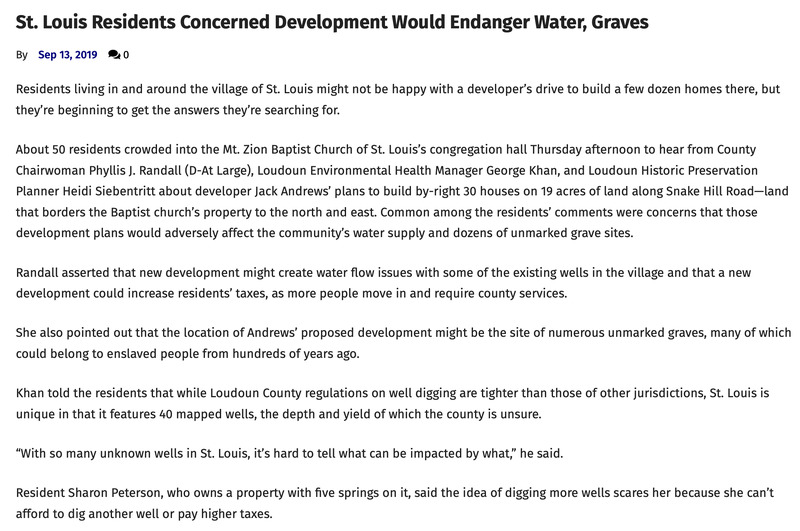
Article on the growing tensions in St. Louis as the possibilities of MOJAX's development loomed. This article notes the first times the COunty Board of Supervisors became involved with the process of stopping the development. Board Chair, Phyllis Randall also notes her staunch opposition to MOJAX's Middleburg Preserve developments. This was the first time St. Louis residents began to see the fruits of their labor in resistance to MOJAX, development, and displacement.
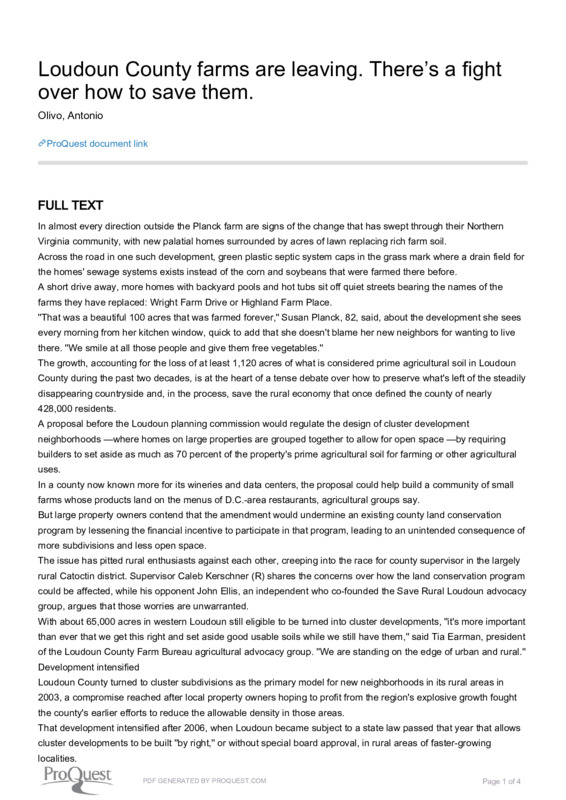
Article on the fight to retain the culture of farming and open spaces in Loudoun County as development and suburbanization continues to spread throughout the western two-thirds of the County. The article graples with the struggle for long time landowners to maintain their land, to stop development, and inspects the way in which conservation is used both as a method of stopping development but an economic boon.
The article mentions JK Land Holdings and Chuck Kuhns and their interactions with Loudoun COunty government as they try to change the definitions of what land can be placed into conservation, affecting the tax break amounts in return for conserving land. This has not been received well by large wealthy landowners like Kuhns who state they will stop seeking conservations in Loudoun County and walk away from contracts. This demonstrates the way in which the myth of progress in perpetuated in the system of controlled modernity that has created a culture of conservation in Loudoun that appears to reifywhite wealthy land ownership.
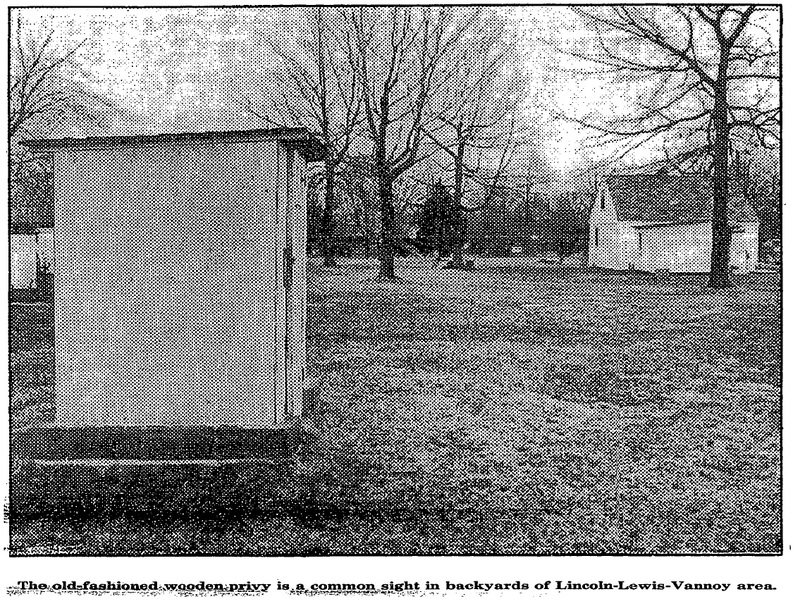
Blog article posted by the New Gum Springs Civic Association on the racism experienced from, and exclusionary practices of the Holland Court Property Owners Association. The HCPOA is seen by the NGSCA as an attack on the community, and something that strips the community of its land further than it already has in the last 20 years as more and more outsiders move in and the community faces redevelopment and gentrification.
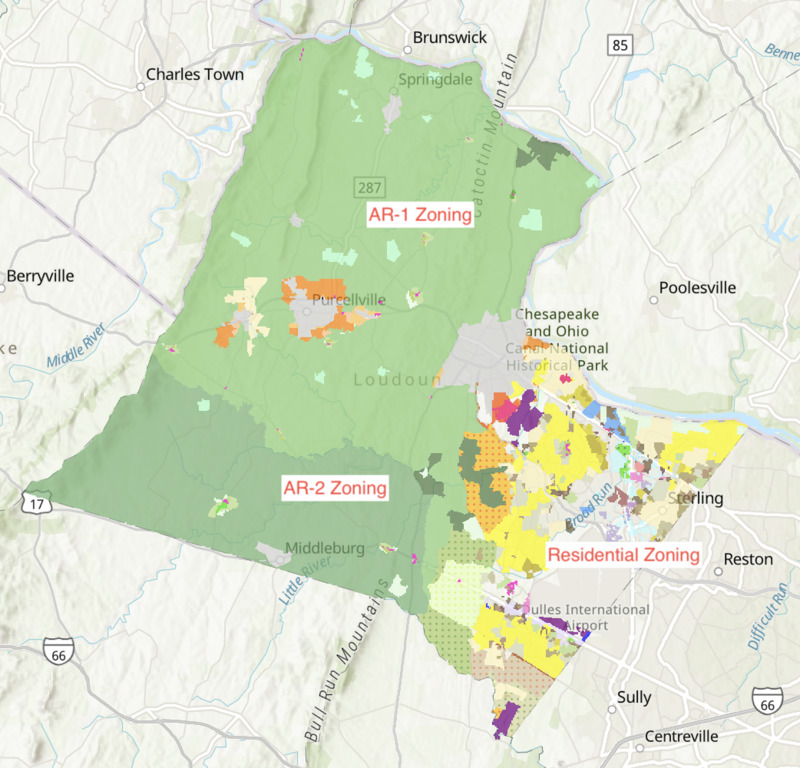
Map of the zoning districts in Loudoun County. The eastern third is a mixture of residential zoning that allows for development at denser levels. On the other hand the western two-thirds of the County are zoned for Agricultural Rural 1 and Agricultural Rural 2, save for larger communities in the area, such as Purcellville, and St. Louis with different zoning laws. AR-1 and AR-2 are used in efforts to stifle development in dense settings controlling for acreage at larger rates from 1 dwelling per 10 acres up to 1 dwelling per 50 acres. This zoning is part of the larger project of controlled modernity in Loudoun County.
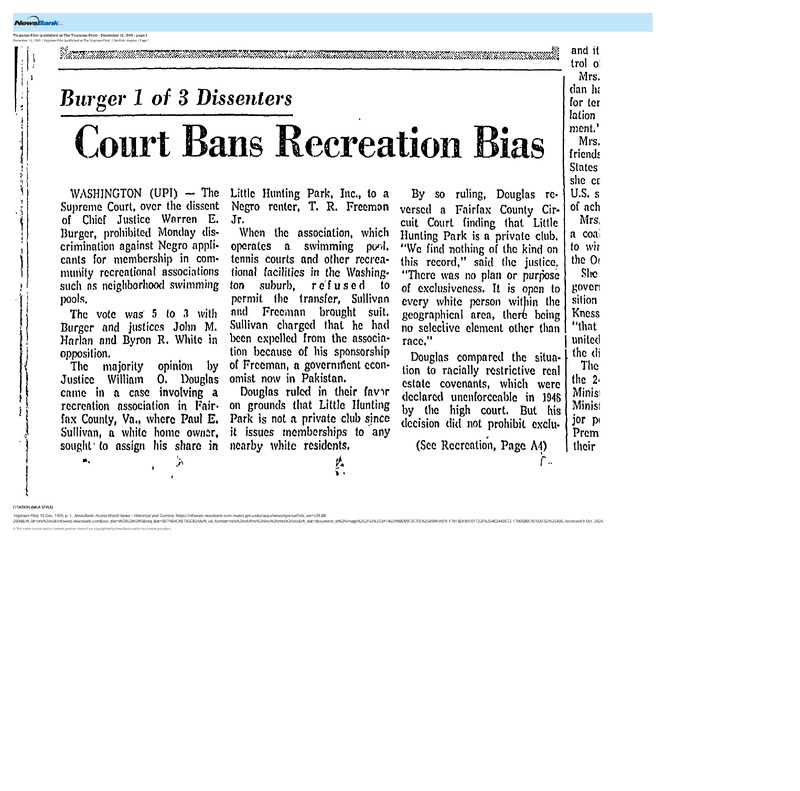
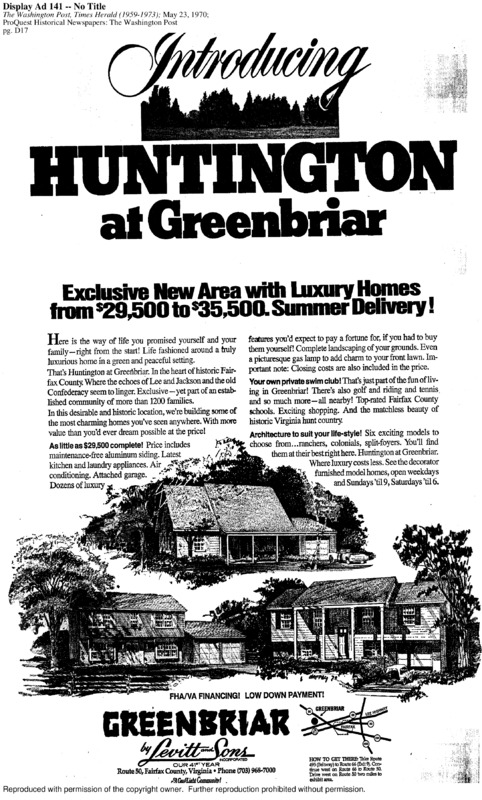
Map of the Greenbriar subdivision, a Levitt & Sons housing development. Levitt & Sons was a national real estate developer known for permitting racial segregation in many of their housing developments in the 1940s-1960s.
Photographs of St. Louis, including the Mount Zion Baptist Church, historic Hamlin School House, and the Middleburg Preserve land as of late March 2024. These photographs include images of the stop work orders placed on MOJAX for stormwater pollution, among other orders that precented the process of building the MP-II land prior to the Kuhns' purchase of the land. This also demonstrates that the land is still private property yet to be placed under conservation easement, with little to no change to it over the last four years.
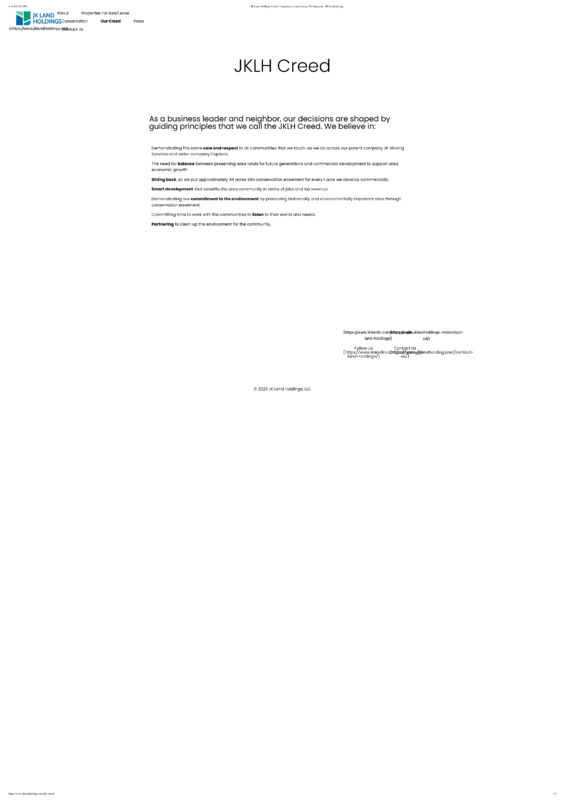
The JK Land Holdings creed for a "balanced approach" to community, conservation and development. The creed both represents the power of conservation as a means of preventing a loss of land to development, however it can inversely reify the myth of progress through acquisition of land and definitions of what "proper" landownership is.
An article on the JK Land Holdings blog providing an update on their recent conservancy of 850 acres through Old Dominion Land Conservancy (ODLC). The article provides an update on the 42 acres of land in St. Louis, stating that ODLC will be assisting the Kuhns place the land into conservation easement. However, since the article was released in June 2022, no change has come to the land in St. Louis as of April 2024.
Self-published article by JK Land Holdings on their personal blog. The article outlines the acreage amount, the goals of the contract for conservation, and the "numerous properties" they have purchased throughout the county for conservation - listing their purpose.
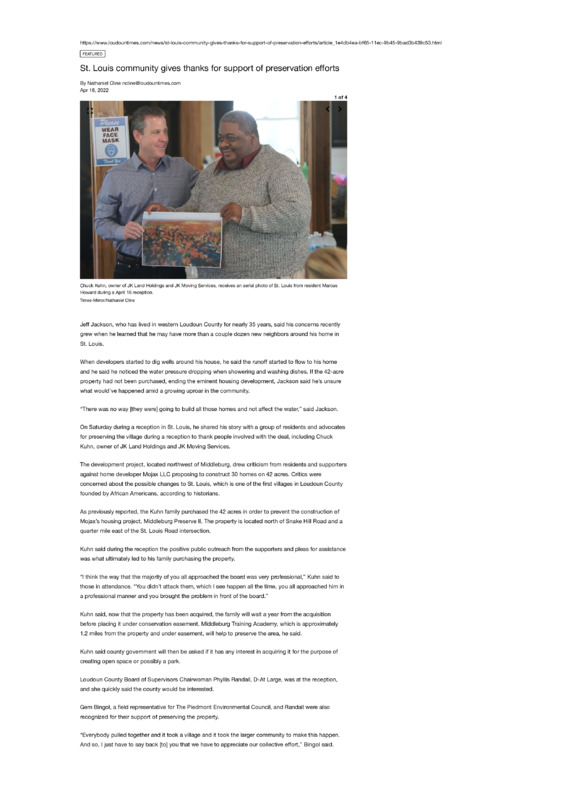
Article on the celebration in St. Louis in April 2022 following months of effort to push for preservation in their community. The article centers the efforts of the community to push the Board of Supervisors into action, as well as highlighting the Kuhns' purchase of 42 acres of land in St. Louis under the idea that it will be placed in conservation easement. This has yet to occur as of April 2024.
Article on the establishment of a preservation plan for St. Louis in January 2022. As part of a unanimous vote, the County Board of Supervisors granted $10,000 for the project, and its initiatives to solve land use problems and create better zoning for the community.
Article on the Kuhns' plans to purchase the Middleburg Preserve land from MOJAX LLC in late 2021 after years of pressure by the St. Louis community for a solution to end the MP development. The article includes comments from local representatives on the matter.
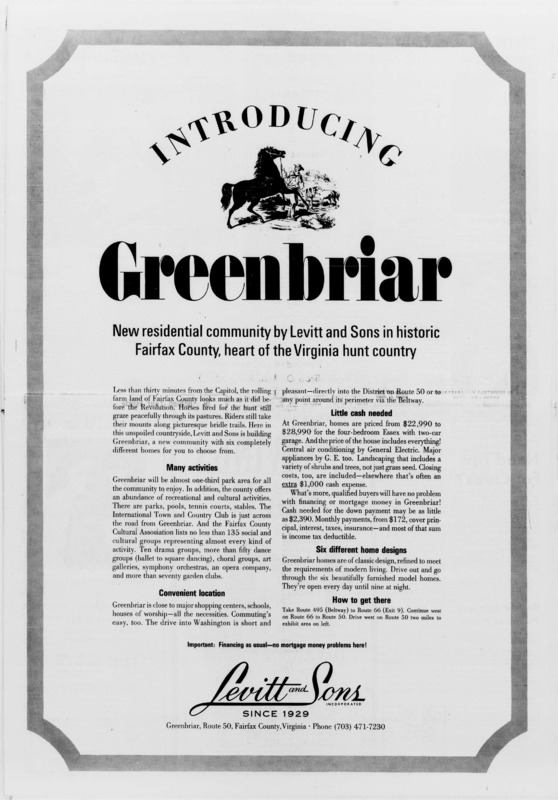
Advertisement for Levitt & Sons' first subdivision in Virginia, in Fairfax County. Levitt & Sons was a national real estate developer known for permitting racial segregation in many of their housing developments in the 1940s-1960s.
Letter to the editor by the pastor of St. Louis' Mt. Zion Baptist Church, Charles Thompson. Pastor Thompson states the urgency to fight back against the predatory development by MOJAX. Written in 2020, Pastor Thompson's article lays out the history of St. Louis as a Black community, one that has fought against the barriers put in front of it. The article notes the changes that have come to St. Louis in the past two decades as new homes have come in, driven property taxes up and displaced residents, and how this has effected the church and the community as a whole. With the looming threat of MOJAX's development, Thompson urged the residents of Loudoun and St. Louis to fight back.
Owens and Sarte's article explore the way in which Loudoun has sought to restrict suburban expansion and development. They point to the use of zoning as one way in which the county has restricted development, particularly in zoning two thirds of the county as rural zoning with much larger amounts of acre per dwelling. This tool is essential to the controlled modernity approach of Loudoun County.
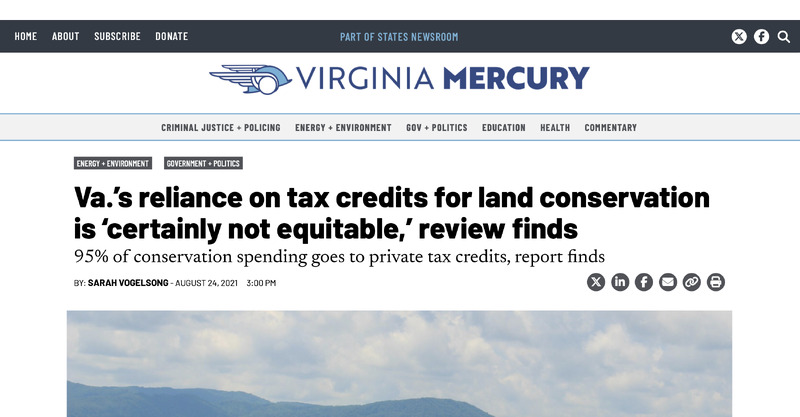
Coverage on the 2021 findings that nearly all of Virginia’s $1.8 billion in spending on land conservation over the past two decades has gone toward tax credits for private land, with a state agency review finding that “a large number” of those credits are likely “being used to help reduce the tax burden of high earning individuals and corporations.” These findings are important as they support the argument that conservation as it currently exists primarily serves to benefit the wealthy. This reinforces the argument that the culture of conservation in Loudoun County is problematic and only serves to reify the myth of progress - to displace, and to supply further wealth to the majority of conservationists who are wealthy and white.
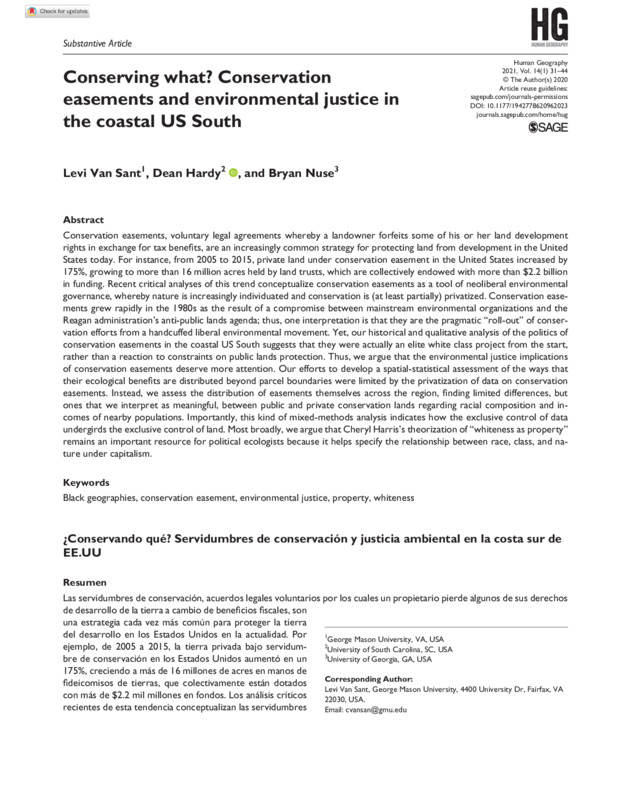
Lang et al. study the way in which conservation benefits are unevenly distributed. Their findings show that benefits for conservation are disproportionately in the favor of white wealthy households in Massachusetts. These findings, and other scholarly work that demonstrates histories of displacement, call into question the culture of conservation in Loudoun County due to the inequalities within conservation easements - the most common method of conservation used by Loudoun.