Poland Jr.'s book examines the great changes that have come to Loudoun since its inception until the time of writing in 1976. His book takes a clear stance against the growing tide of development and change in the county, though they fail to critique the changes in a deeper level more than a loss of farming culture. Whereas communities of color often bear the greatest brunt of damage and displacement by way of development, Poland's inspection of the myth of progress centers only white communities losing a way of life in farming by way of development. He builds a first step towards examining NOVA's myth of progress, while calling for the culture of conservation and controlled modernity process of todays Loudoun.
Scheel's book looks at the area surrounding Middleburg, the town to the southeast of St. Louis. These two communities are inextricably linked in their history, as many Black residents of St. Louis worked in and around Middleburg, as well as for residents of Middleburg. Often the Black residents worked at the Middleburg Training Center, the horse training and racing track just to the south of St. Louis, taking care of and training the horses of white horse owners.
Scheel's final passages of the book highlight the way in which development and progress is the county is discussed. Specifically, he highlights progress as a good for all, where the land is improved from the colonial era to the time of his writing. His passage is a clear representation of the myth of progress.
Chapter in Scheel's book on the history and formation of St. Louis. History covered in the book ends with the 1960s. The chapter documents the early formation of the town, and the creation of a strong, vibrant Black geography - one interconnected to other Black villages in Loudoun County.
Meeting of the Loudoun County Board of Supervisors on the MP-II plan, the MOJAX development on MP-II, and land usage in St. Louis. The public was given the opportunity to provide input on the MOJAX MP-II development plan, and the Loudoun County Board Member Initiative to look into rezoning St. Louis and creating a Village Plan. Public input from the community gives insight into the views of the community on how unfit the MOJAX plan was, and the way in which it would put a historic community on the brink of gentrification and drying up wells. Black community members whose family's go back generations speak.
Home page for the St. Louis Village Plan Task Force. This page the names and positions of each members of the Task Force as well as their dates of service in the position. The three Black representatives to the Task Force are Marcus Howard, Laverne Tootie Warner, and Sharon Peterson. Sadly, Marcus Howard passed away at the end of July 2022. His position as the representative from Mt. Zion Baptist Church has stayed vacant since August 2022. The website outlines the goals of the Task Force and provides a link to the Task Force Files page.
Map of the three lots that make up the former Middleburg Preserve II development that had been slated to be built by MOJAX LLC. Lot 596-36-6258 contains the graveyard containing 20 marked graves and over 30 or more unnamed graves of St. Louis residents and enslaved people.
The St. Louis Village Plan is the culmination of over two years work by the St. Louis Village Plan Task Force to shape and direct policy frameworks for the future of the Village.
The Task Force and its draft plan "is the result of community engagement and outreach led by the St. Louis Task Force members that will implement the direction of the Board of Supervisors (Board) to create a policy framework to address land use and infrastructure issues in this rural historic village that has experienced underrepresentation and has reached a critical moment of change."
In the wake of the MP-II and MOJAX incident, the purchase of the land by the Chuck Kuhns-led JK Land Holdings, community-led resistance, and Board of Supervisor action, the St. Louis Village Plan Task Force was brought together to manage growth and preserve the historic nature of the community, while improving infrastructure, water access and quality, and approving proper zoning for the size and nature of the community. Acknowledgement of the county's failures to serve Black community's like St. Louis, and the efforts of Black leadership made this Task Force possible. The plan leaves space for a water feasibility study to be conducted if voted upon by the community. This study is a "technical evaluation and analysis of the potential methods of providing water and/or wastewater solutions to communities, the projected costs, and the extent of work necessary to implement those solutions."
The St. Louis Village Plan will be voted upon in the coming months of Spring 2024.
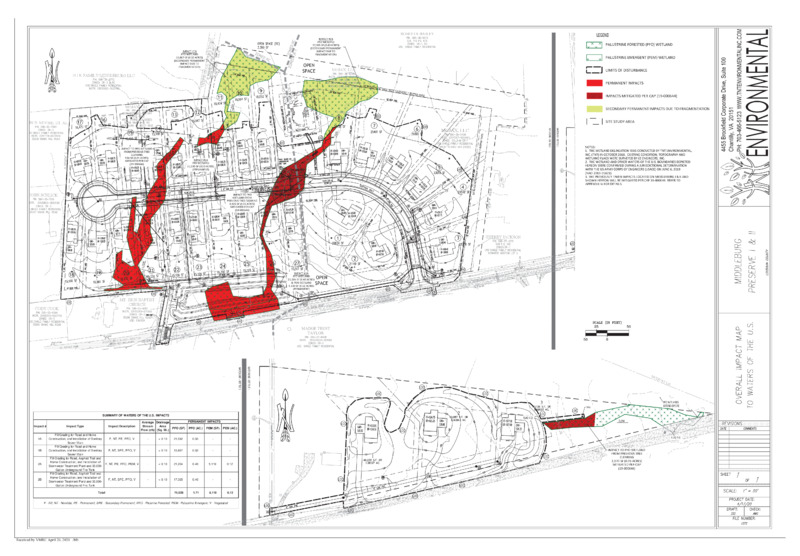
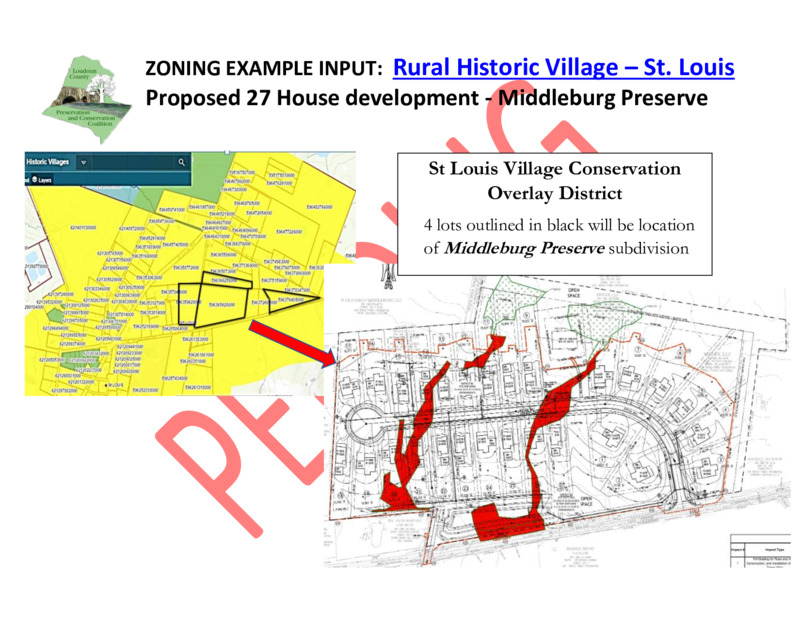
Map of the impact to the wetlands and water in the Middleburg Preserve cluster development. The document also shows the final development plan set by MOJAX LLC for 30 homes in total, as well as the graveyard inside of the development. MOJAX's plan for the Middleburg Preserve would have had deleterious effects on both the wetland, the community, and the water supply of St. Louis.
Website containing documents, meeting minutes, and audio files for the St. Louis Village Plan Task Force from all task force meetings held between 2022 and 2023.
A chronology of the purchase of the Middleburg Preserve-II property in St. Louis by MOJAX. In this document, the Preservation and Conservation Coalition provide a clear outline of the key events, the missteps, and improper work done MOJAX, as well as the work to resist the development by the community from the period of purchase in 2017 up to its publishing in May 2020. This document also highlights the way in which MOJAX often began work without proper permits, in violation to by right development standards - standards which may give freedom to develop at will as long work falls within guidelines set out by the county, but rely upon having proper permits to begin work. Over the next year and a half following this report MOJAX would eventually seek to sell the property to the County, and later to Chuck Kuhns of JK Land Holdings and JK Movers.
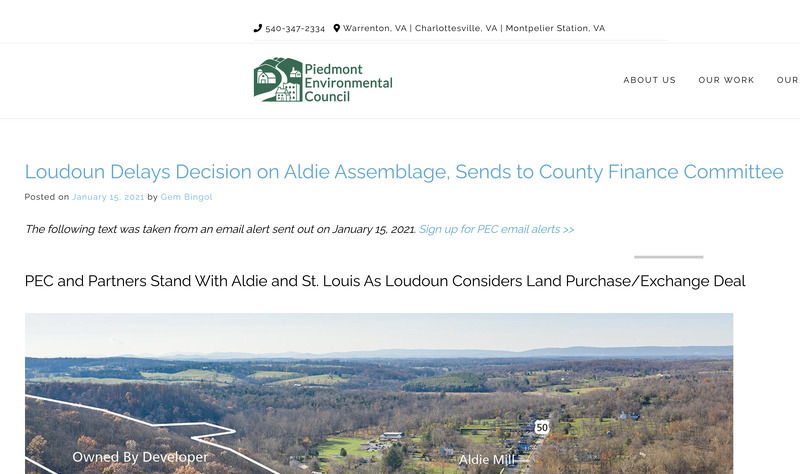
Document that outlines the Loudoun County Board of Supervisors and MOJAX deal to settle MOJAX's land holdings in St. Louis at the Middleburg Preserve II (MP-II) property. MOJAX attempted to secure the Aldie Assemblage Property and have the county buy the MP-II property, in essence trading spaces. This was following the resistance brought forward by residents of St. Louis, and the broader community in opposition to MOJAX's development plan of 9 homes, later to be expanded to 27. The County and MOJAX never reached a deal.
A survey by History Matters of 210 properties that relate to the history of African Americans in Loudoun County, Virginia. Sponsored by the Loudoun County Board of Supervisors & The Black History Committee of the Friends of the Thomas Balch Library, the survey of the 210 properties includes analysis of the different eras in which the properties were built, the themes and lifestyles of the eras, and a description of many of the Black towns, villages, and enclaves in Loudoun. The document provides historiography and background research on communities including St. Louis - however ends its discussions and analysis of Black communities with the end of segregation in the 1960s.
The St. Louis Village Plan's existing conditions report that provides insight into the current status of St. Louis. This report discusses the current challenges St. Louis is facing in water problems, and demographic discussions - which both point to great struggles in water access and changing demographics as suburbanization and development change the community. This report was prepared as part of the St. Louis Village Plan Task Force - formed in response to the communities' experience with and organization against the MOJAX LLC development in their village. This report is a first step process towards conserving the community from further attempts at large scale developments.
Transcript of an audio interview of Sharon Peterson, conducted by Dr. Wendi Manuel-Scott. The interview includes Marcus Howard of St. Louis. Sharon Peterson, Marcus, and Wendi discuss a variety of topics surrounding life in St. Louis, and the experience of living in St. Louis during a time of change.
Important discussions include Sharon Peterson's experience with having to sell land that had become too expensive to continue owning, the experience of shame and remorse for selling family land, and the pain of buying back a small portion for a 1000% increase on the original selling price. Sharon also discusses the experience of growing up without efficient water access and indoor plumbing, and clean water.
Transcript of an audio interview of Laverne Tootie Warner, conducted by Dr. Wendi Manuel-Scott. The interview includes Marcus Howard of St. Louis. Mary Howard, Marcus, and Wendi discuss a variety of topics surrounding life in St. Louis, and the experience of living in St. Louis during a time of change.
Mary Howard, former owner of the land that was later slated to become MP-II by MOJAX, notes the historic problems surrounding water in St. Louis, as well as her youth in St. Louis. She also discusses the interconnections between the Black villages of St. Louis, and the intrinsic ties between the Middleburg Training Course where horse training took place and the Black trainers and workers who helped the course run for decades. This track was recently purchased for conservation by Chuck Kuhns.
Transcript of an audio interview of Laverne Tootie Warner, conducted by Dr. Wendi Manuel-Scott. The interview includes Marcus Howard of St. Louis. Tootie, Marcus and Wendi discuss a variety of topics surrounding life in St. Louis, and the experience of living in St. Louis during a time of change. Important discussions include the slow violence and experience of dispossession that equate to the myth of progress (see transcript below). This is visible through the loss of land under the guise of neo-colonial "discovery" of quality land, after land was once given to formerly enslaved because it was poor quality. Other discussions include Banneker Elementary, and the community members of St. Louis.
Transcript of an audio interview of Cristelle Shorts Hughes, conducted by Dr. Wendi Manuel-Scott. The interview includes Marcus Howard of St. Louis and Mrs. Hughes' daughter Carolyn Grayson. Their interview includes a variety of topics surrounding life in St. Louis, and the experience of growing up in a rural town such as St. Louis. Important discussions are had surrounding the water situation in St. Louis, both in the present and in the past. Mrs. Hughes' experience fetching buckets of water from miles away, off other peoples land, and through driving out of St. Louis points to both the neglect of Loudoun County to not provide clean water systems, but also the displacement in place of a community that had to live with such poor water quality. Mrs. Hughes and her daughter both show their skepticism of what is happening in the MP-II and whether or not they will ever receive public water, believing it will only come when more development comes (72). The interview is a look into the rich history of St. Louis, and the fears of losing a community.
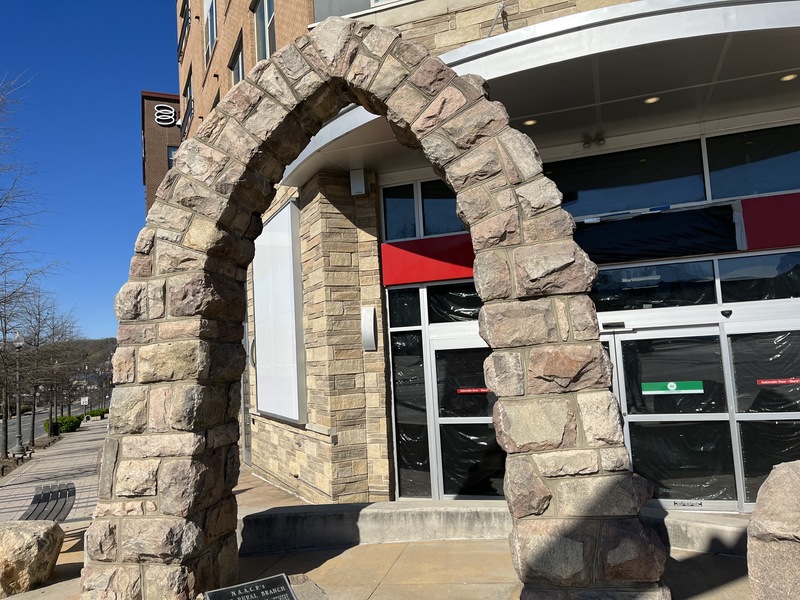
Photographs of Tinner Hill Historic Park, Tinner Hill's monument arch, the historic marker plaque, and the apartment complex formerly containing a Target behind the arch. The stark contrast between the locations across Lee Highway (S Washington St) where the monument arch lies is apparent, Tinner Hill has a secluded feeling, cut off from the developed and commercial lands that lie around it and across from it.
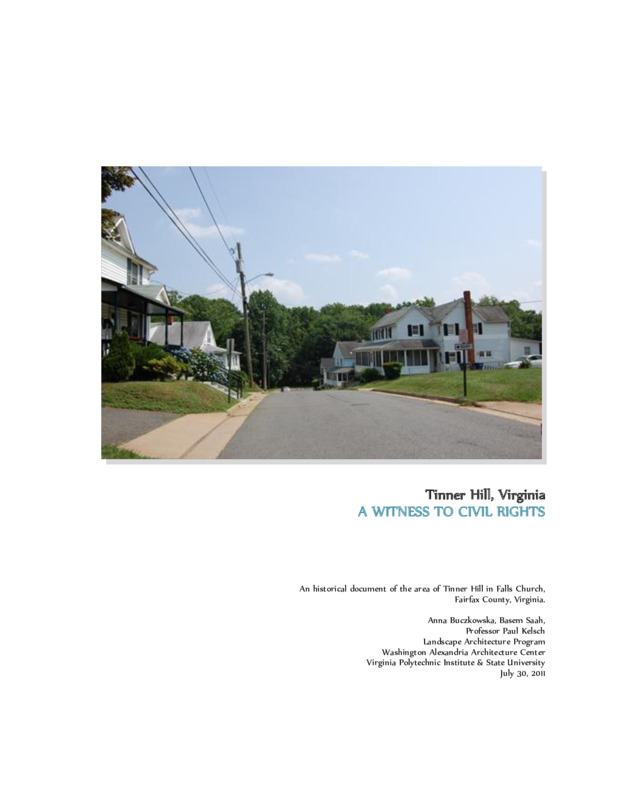
Academic study of Tinner Hill and its history of Civil Rights activism. The research analyzes the same cases of slow violence, exclusionary practices, and structural racism that pushed Tinner Hill and Black Falls Church to organize. Buczkowska et al. provide important research on the history of Tinner Hill and their study is essential reading to understanding the civil rights history of the community, the actors who drove this work, and the location itself.
Article by Ed Henderson II, grandson of E.B. Henderson, on the Black history of Falls Church and Tinner Hill. This article details the history of slow violence, displacement, and structural racism that plagued the Black community in Falls Church for decades, while also highlighting the work done by Tinner Hill, and Falls Church residents to resist attacks on their community.
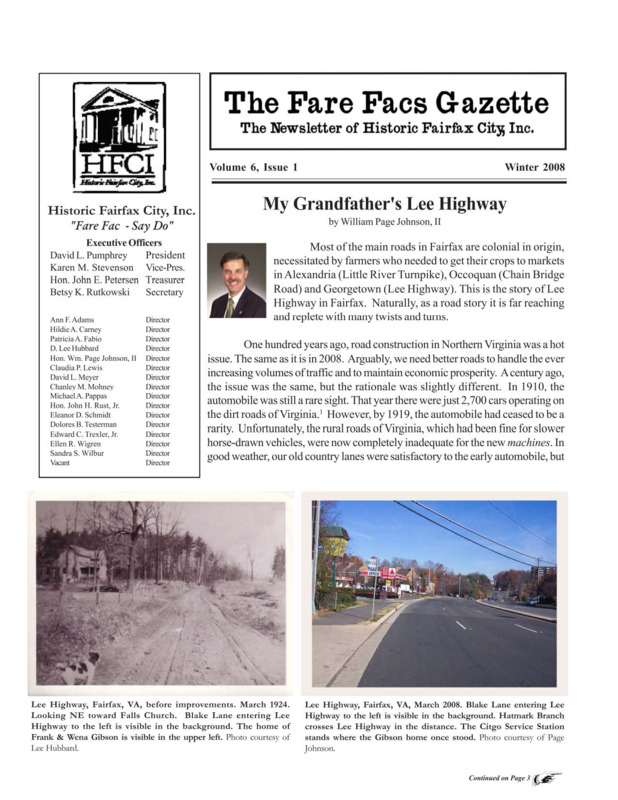
Article written in a local newsletter about the history of building the Lee Highway, and the impacts it had on Northern Virginia. Page 9 holds an important quote that demonstrates the power of the myth of progress. Quoting Merton E. Church, a real estate agent from Falls Church who wrote to the Washington Post, they state the rise in value of homes, the increases in profits, and the amount of new development along the road due to its construction. Yet, Tinner Hill, who was spllit down the middle by this road experienced few to no economic gains - only displacement in the case of multiple homeowners who were required to leave or move their homes. Page's article also neglects to mention the impact of the road on Tinner Hill.
Document created by the Library of Congress that outlines the location, a short history, and the historic importance of Tinner Hill. This document also contains a list of additional sources - books, academic references, interviews, articles, and maps - that document the history of Black Falls Church, Tinner Hill, and topics involving Tinner Hill and its community's residents. The document also provides a list of historians who have studied the area.