
Lincoln-Lewis-Vannoy Park Today
In a 1959 Washington Post article entitled “A County of Contrast: Fairfax Subdivisions Mingle Well With History,” [31] journalist Murial Guinn wrote:
“History is more than a tourist attraction in Fairfax County. It is a yardstick for the solutions to future problems.”
While Fairfax County played roles in the Revolutionary and Civil Wars, the nostalgia for such "historic pasts" which drive tourism often obfuscate the horrors experienced by enslaved peoples in the region. Plantation homes in the present have been rebranded and repurposed as wineries, wedding venues, and their former uses erased from memory. When this article claimed that history would provide the answers to the county's future problems, one wonder's whose history is evoked. In the case of the residents of LLV, their experiences are part of a much longer history of African American marginalization and a lack of care towards their concerns on the part of local, state, and federal governments. Although these residents paid taxes and showed up to meetings, their needs were met in a timely matter.
Historian Colin Gordon argues that in many cases, Black Americans are expected to earn their citizenship, while for white Americans, the benefits of citizenship are a given. The unequal access to local citizenship is clear in the lack of attention the LLV neighborhood received. Their problems were not of their own doing, nor could they fix them on their own. In a 1968 Washington Post article, journalist James Yenckel stated “ignored for years, FFX County’s dozen or so poverty-level communities are beginning to demand the same public services their more affluent neighbors take for granted.”[32]
As early as 1972, residents of LLV expressed their fears about what would happen when their neighborhood got on the grid. Homeowners feared that they would “be taxed right off their land.”[33] Having seen the County’s unmanaged suburban growth, renters and homeowners alike knew that housing developers would jump at the chance to buy this land once the expensive sewer project was complete. As residents foretold, housing developers, seeing the updated infrastructure, pursued building new homes in the area.
In 1988, just three years after the sewer project was completed with local and federal funds meant to help poor communities, developers began buying up land and built colonial-style homes in Lincoln-Lewis-Vannoy. The LLV community was either bought or priced out of their neighborhood as housing prices increased. Then in the early 2000s, a new wave of development occurred. Current listings on the real estate website Redfin advertise massive homes listed in the millions.
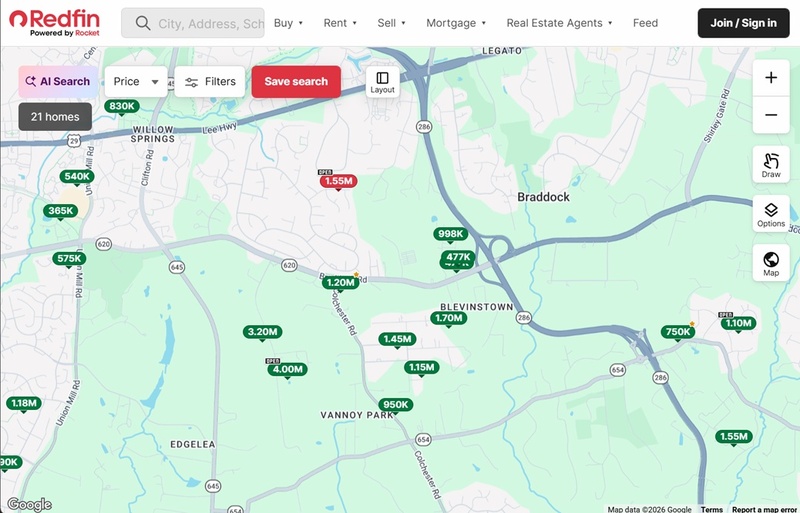
2026 Real Estate Prices for Vannoy Park
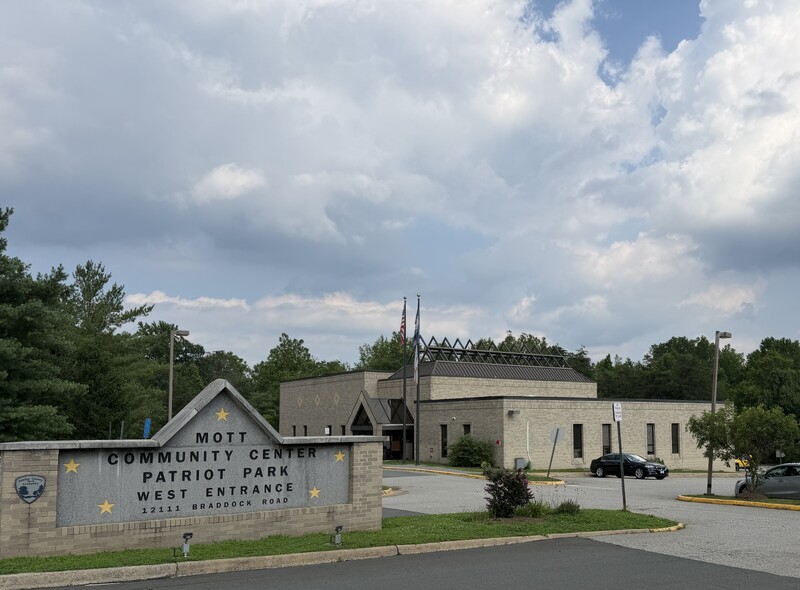
Mott Community Center today
Current residents of LLV are experiencing the rural idyll finally made accessible by the likes of the Motts, who tirelessly fought to modernize their community, help their neighbors access their civic rights afforded to them and make life just a little bit easier. Fortunately, their impact has not been forgotten. Thanks to Keith Mott, the aptly named Mott Community Center, off Braddock, now tells the story of Marguerite and James Mott.
More research is needed to determine the root causes of the issues this neighborhood faced. But this exhibit begins to show that a small community, only three miles west of the George Mason University campus in Fairfax, was isolated and ignored for decades. As local citizens, they were caught in a bureaucratic web of delays, studies, and changing priorities, victims of systemic racism in the County. While this story may have been erased from memory and history, aerial maps provide a glimpse into this enclave's history.
___
[31] Muriel Guinn, “A County of Contrast: Fairfax Subdivisions Mingle Well With History,” Washington Post, April 25, 1959, Proquest Historical Newspapers: Washington Post.
[32]James Yenckel, “Fairfax Poor Areas Seek Services: Hearing Slated Organizing the Poor Seek Federal Grant,” Washington Post, June 3, 1968, ProQuest Historical Newspapers: The Washington Post.
[33]Richard Lewis, “Search for Sewers Goes On in Fairfax,” Northern Virginia Sun, June 17, 1971, Virginia Chronicle, Library of Virginia.