
"You Can't Rebuild What Was There"
The Birth and Decline of Black Communities in Fairfax
Dueling political factions have sparred over Fairfax’s racialized residential landscape from the moment of emancipation. The efforts of Black home buyers and a few White residents willing to enable African American land purchases were countered by formidable alliances of elected officials, land developers, and White residents devoted to an exclusionary housing system. These competing forces faced off throughout the twentieth century across the terrain of financing and controlling suburban growth. The origins of suburban Fairfax reveal intentional partitioning of land and investment in infrastructure directed to build and protect White islands of advantage. In Fairfax, these islands emerged in the form of middle-class subdivisions, inward-facing communities of winding lanes and cul-de-sacs with limited entry points, essentially walled off from busy roads and nearby commercial districts.
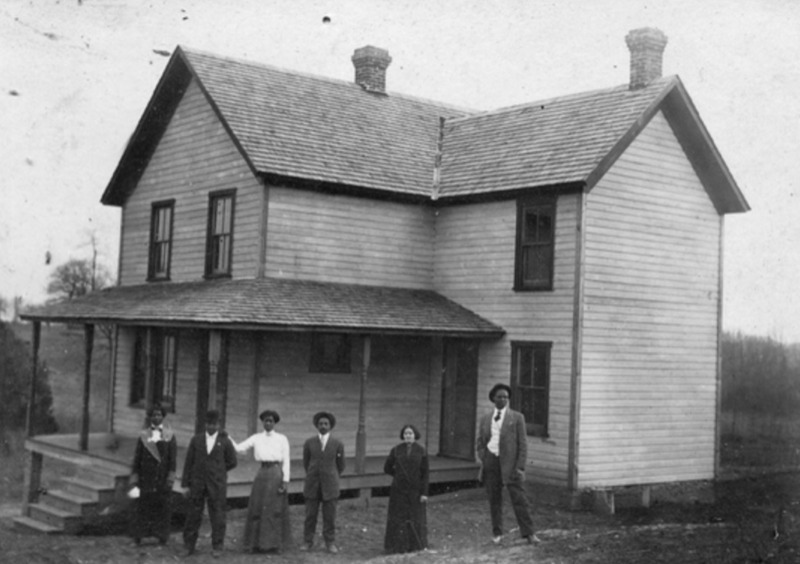
Photo of the Tinner family in the late 1800s.
The physical walling-off from public thoroughfares reflects their conceptual walling-off—for people of sufficient means—from the happenstance and uncertainties of commercial land use and densely settled populations. Understanding this exclusionary landscape requires recognizing that segregation ordinances, covenants, and zoning laws drew their power from entrenched racial ideologies. These deeply rooted beliefs sanctioning the hoarding of power, access, and resources.