
It is White and Getting Whiter
Demographic Shifts and Segregated Progress
At the turn of the twentieth-century, cultural forces, anti-Black violence, and discriminatory legislation suppressed Black residency while enticing white-collar workers and their families to settle in the county—a pattern with lasting effects. By 2022, after more than a century of biased programs and policies, the county boasted over 1 million people (about the population of Delaware), nearly half of them White and fewer than 10 percent identifying as Black. Fairfax County’s demographic trends reveal critical insights into the historical patterns of racial inequities. Although African Americans made up under 10% of the population in 2022, an analysis of demographic shifts from 1790 to 1970 paints a more complex picture. Based on the Federal Decennial Census, Figure 1 illustrates several important demographic trends among African Americans between 1790 and 1970. From the 1880s to the 1930s, the percentage of Black residents in the county declined steadily until it plummeted to 3 percent between 1930 and 1970.
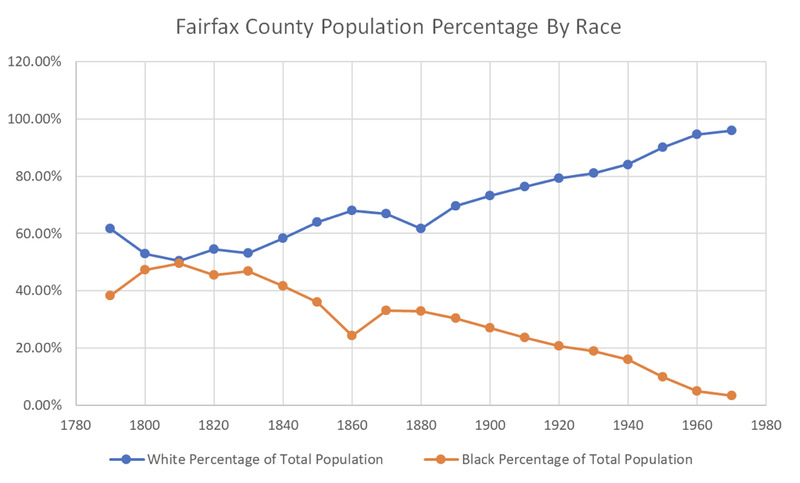
Figure 1: Total Population of Fairfax County by Race (Percentage). US Census 1790-1970.
African Americans constituted a significant percentage of the County population until 1900, when they began to decline. The significant decline in the Black population’s percentage from the 1880s to the 1970s is counterbalanced by a stark increase in the White population. While the Great Migration of African Americans from the South across the country may explain part of this trend, and while Figure 1 shows a steady decline in the total percentage of African Americans in Fairfax between 1880 and 1930, it shows a precipitous drop from 1940 to 1970. A cursory glance at this demographic decline would suggest Fairfax followed the national trend, but a closer read of the data reveals something more complicated happened here.
The table in Figure 2 shows the total Black population in Fairfax to have been relatively stable across the century. During periods in which their numbers declined as a percentage of the total, African Americans actually increased in numbers, from 4,803 in 1930 to 15,219 in 1970. What this significant numerical divergence shows is that the real change was a massive influx of White residents into the county, driving their numbers from 20,453 in 1930 to 436,616 in 1970.
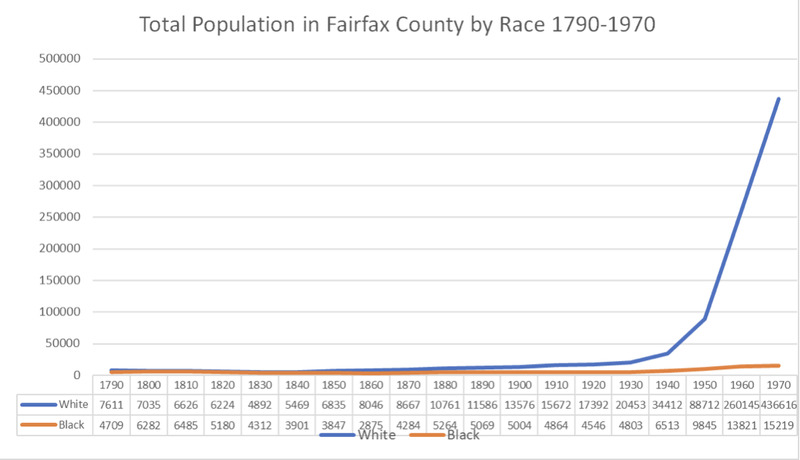
Figure 2: Total Population of Fairfax County by Race. US Census 1790-1970.
This flow of White homeowners was facilitated by federally backed home loans provided on favorable terms to White borrowers amid policies that favored the post-War World II culture of suburbia, a geography where, as Andrew Friedman writes in Covert Capital, a history of Northern Virginia development, “abundance was freedom and freedom was abundance.” The federal government in collaboration with lenders, home builders and real estate agents, promoted the good life in Fairfax.
The evidence suggests that the decline in Black residents between the 1880s and the 1970s was not simply a reflection of natural market forces but the outcome of deliberate policies. These demographic trends and patterns of inequality reflect a long genealogy of choices made at the local, state, and national levels. This pattern of inequality originated in Virginia’s plantation economy, in which a small, wealthy planter class wielded outsized political and economic authority to construct an unjust system. Colonial Fairfax’s rich economy rested, as in other Virginia counties, on the production of tobacco produced by indentured and enslaved labor. Tobacco cultivation depleted the soil, resulting in the diversification of crops and fracturing of large plantations, which led to a transformation of slaveholding in Northern Virginia. The Civil War and the failed Reconstruction that followed it created a brief moment of opportunity in which free Blacks and formerly enslaved people could access landownership. Access to land expanded as plantation owners, under economic duress, sold their properties to migrants from the north, called “carpetbaggers” by some. Some of these transplants in turn sold portions of their newly acquired property to Black farmers. This strategy of making the ownership of housing and land attainable to Black people angered some local Whites and portended the construction of an exclusionary government that failed to represent the aspirations of all.
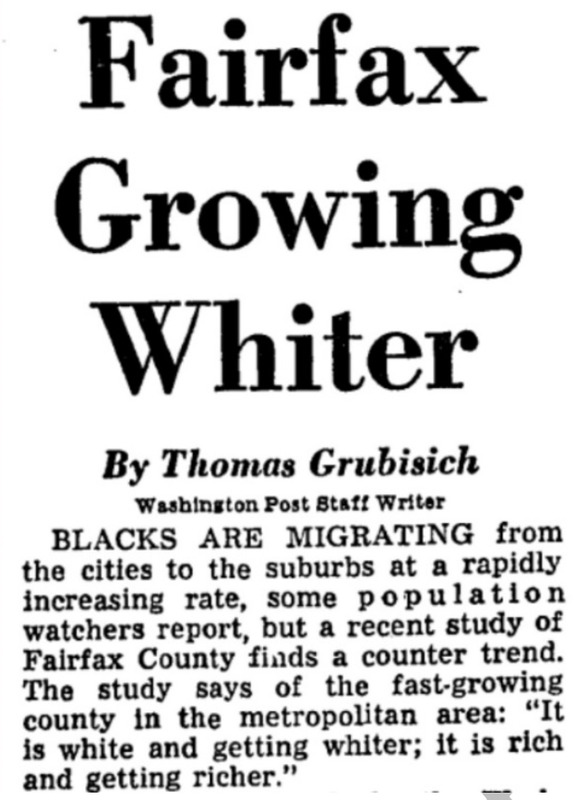
Sentence of note in the Washington Post, October 29, 1970: “It is white and getting whiter; it is rich and getting richer.”