
The Rights of Equal Access to Public Spaces
After Congress passed the Civil Rights Act of 1964, African Americans could claim the Constitutional right of equal access to public spaces. Yet the Act did not ensure access, only the legal right to it: Activists still had to take cases of exclusion to court, leading to years of continued agitation and legal action to receive due access, especially to privately owned spaces. In Race, Riots, and Roller Coasters, historian Victoria Wolcott argues that desegregating leisure spaces was “part of a broader struggle for control of and access to urban space” and part of this struggle was that black Americans “could not act as consumers on an equal basis.” Furthermore, she notes that when recreation sites were desegregated, some places (like pools) chose to close altogether, rather than integrate. This was the case in Northern Virginia. Owners of recreational sites chose to close their doors rather than integrate. In Loudoun, the county neighboring Fairfax, the local Leesburg fire department, rather than comply with requirements to integrate the swimming pool it operated, filled it with rocks and cement, closing it for all.
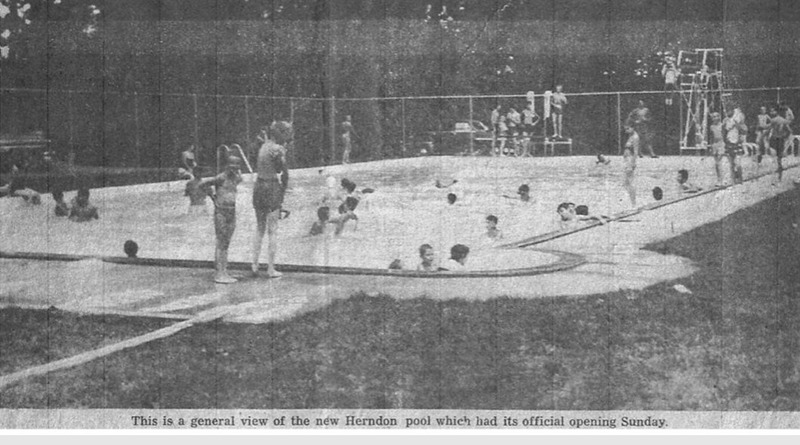
Annual opening of the Herndon Swim Club in 1956, when Fairfax County pools, public and private, were still segregated.
Fairfax County was a battleground for recreational access for black Americans, and several major court cases fought here led to change in other places as well. For example, on May 23, 1965, James and Marguerite Mott (the Lincoln-Lewis-Vannoy activists mentioned above) headed to Lake Fairfax Park to enjoy the spring day and to have a picnic. With partly cloudy weather and temperatures in the 80s, it was a perfect day to enjoy the park’s natural beauty. But as they arrived, park staff stopped them because they were Black. One year after passage of the 1964 Civil Rights Act, Fairfax County parks were still enforcing a racial ban as a “long established and maintained policy.” The Motts sued. Their civil rights case reached the Federal District Court in Alexandria, which required the park to end its racial ban.