
Gum Springs
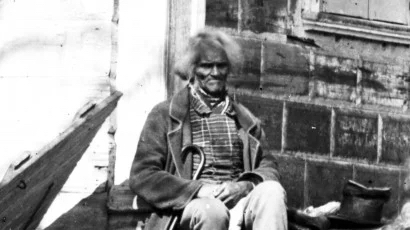
Gum Springs founder West Ford, namesake of the embattled 1980s housing project, photographed at Mount Vernon, his place of employment, in the 1860s.
Gum Springs is the oldest African American communities in Fairfax County. It lies just north of George Washington’s Mount Vernon and was established by freedman West Ford in 1857 when he split his 214-acre tract of land purchased in 1833 for his descendants. The significant scholarship that has emerged on the rich social and cultural history of this community of free Black residents and their descendants highlights the county’s under- investment in the needs of such citizens compared to services that benefited their White neighbors. Notably, when Highway One, or Route 1, lined by shiny new all-White housing developments, was expanded in 1934 to run right through the historic settlement, it triggered a cascade of drainage, health and safety problems.
Despite being documented over and over by newspapers and community studies during succeeding generations, the problems received at best superficial acknowledgment from county authorities and negligible redress from public coffers.
Gum Springs’ struggles exemplify how the four government mechanisms outlined in this report drained resources from Black communities and, whether deliberately or reflexively, privileged newer White settlements. The outcome of this imbalance starkly shows in the steady decline of Gums Springs’ infrastructure and the cascade of socioeconomic impediments triggered by that dilapidation. In the absence of such basic services as sewerage, lighting, roads and plumbing, area homeowners found it difficult to improve their homes, meaning that by the 1950s, their neighborhoods were viewed as neglected communities home to dozens of dilapidated and filthy structures. Deeming Gum Springs “blighted” blocked fresh development that would modernize it, necessitating its residents’ decades-long struggle for services readily provided to residents in other communities.
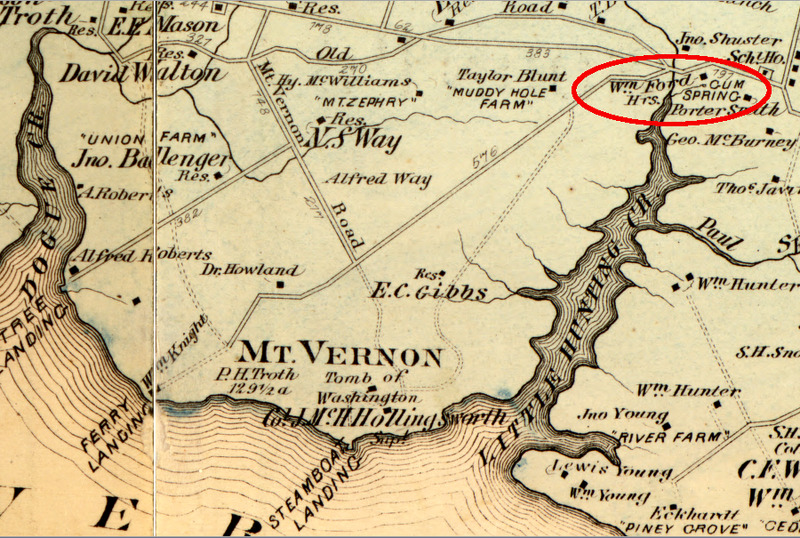
Gum Springs circled in red, miles inland from Mount Vernon.
In some ways, the living conditions of Black residents in Gum Springs changed little in the years following World War II. The enclave’s housing stock was dilapidated but, for residents accustomed (if not resigned) to official neglect, it served. By the 1960s, however, forays by the growing county government into matters like hygiene, sewerage, and building standards, led to a crisis for those in substandard dwellings. The story of Rev. Thomas Brown, resident in Gum Springs from birth in the 1920s, illustrates how local residents made do until the regulatory boom dropped. In 1952, Brown received, at no cost, a three-room boxcar from the Southern Railway Company. Brown, his wife, and six children made their home in it for ten years and even improved on it, turning it into what Brown called, “the only air-conditioned shack down there.” Until the 1960s, Brown’s and neighboring homes were almost entirely “wooden shacks and dirt roads ... [that] lacked sewers and running water.” As the county began flexing new regulatory muscle, however, such houses were no longer stable homes. Under a minimum housing-standard ordinance passed in 1961, Fairfax health authorities forced sixty-two families to relocate. Three such families, all Black, were forced out of Gum Spring in spring 1963. The prior winter, “because of the unsanitary and dilapidated conditions of the dwellings, the tenants were told by county authorities to move out by Feb 21,” a deadline that was extended as they struggled—unsurprisingly, given the scarcity of affordable options open to non-Whites— to find alternative residences.
When, in 1966, Gum Springs finally became “the first in the country to receive federal anti-poverty funds,” the optimism generated by the promise of governmental investment was short lived. Development came only slowly, as budget cuts and bureaucratic hurdles stalled federal anti-poverty funds for long-awaited modern housing complexes and subdivisions open to Black occupants. Only after 1977, when a Nixon administration freeze on funding lifted, was construction finally completed on the Spring Garden Apartments and Brosar Park subdivision serving residents of Gum Springs. Yet even this minimal level of progress could not be maintained.
Reagan administration austerity measures of the 1980s dealt a severe blow to Gum Springs. Sudden slashing of funding for community development programs stalled the already incremental advancements and exacerbated deeply rooted challenges.
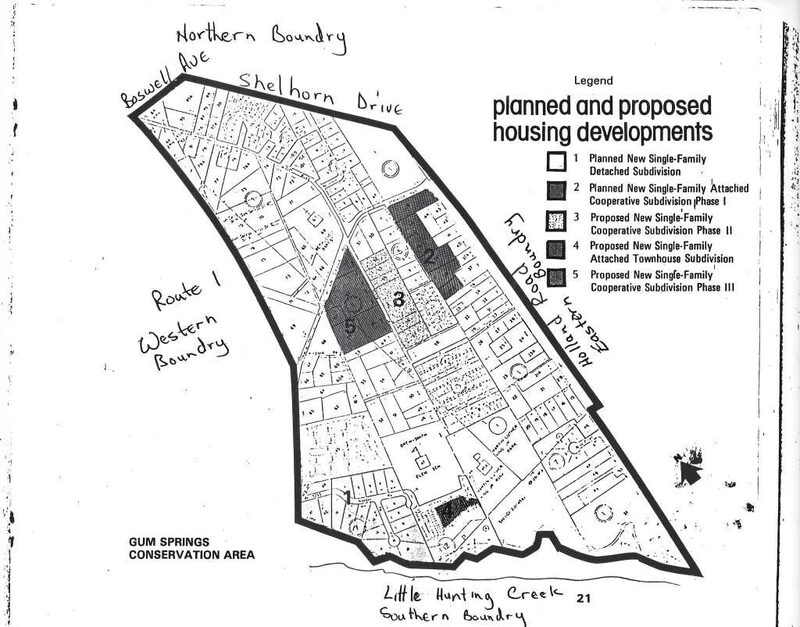
The original borders of Gum Springs.
In 1982, residents were still waiting for approval by the federal Department of Housing and Urban Development to construct the “105-unit West Ford town house development” named for the manumitted Black man who, in 1832, purchased the land that became Gum Springs. Residents were also frustrated by White resistance to affordable housing construction. Rev. Brown, for instance, while no longer living in a boxcar himself, complained to the Washington Post that “a handful of Whites who’ve just moved in about two years ago ….do not know or care about the community’s history or concerns.” Other Black Gum Springs residents perceived neighborhood “opposition [as] racially motivated.” For their part, White residents insisted their position emerged from fears “the project would serve low-income outsiders rather than Gum Springs residents.” Animosity toward the West Ford project persisted, with Republican Congressman Stanford Parris receiving thousands of letters against it.