
Addressing the Housing Crisis
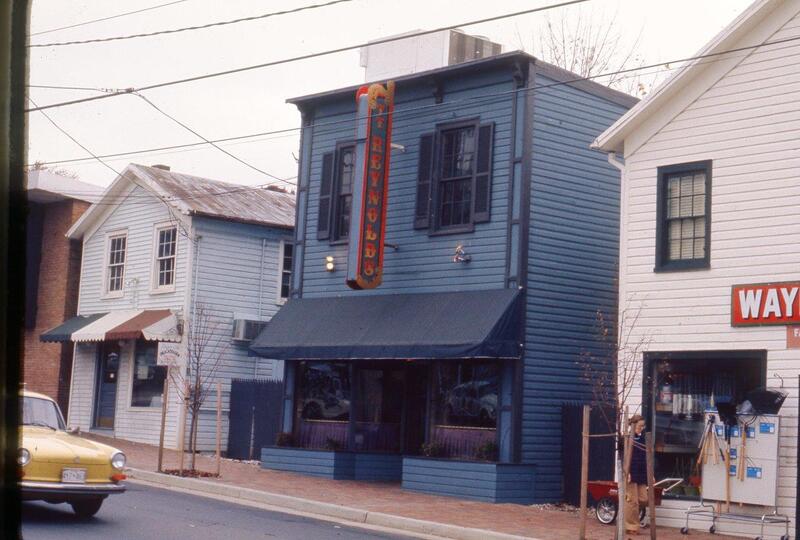
Main Street Historic Fairfax, 1980s. Courtesy of Fairfax County Public Library Virginia Room.
Despite legal defeats, county officials continued to pursue ameliorative strategies to address the crushing housing crisis. Opposition taken up in the courts foiled several attempts by Supervisors to eke affordable supply from fast-paced development in the private sector. A 1984 Virginia Supreme Court ruling struck down a policy to mandate land donations and infrastructure improvements in exchange for rezoning approvals on grounds that the government could not “require a citizen to turn land over the county and build roads for the benefit of the public.” A revised approach substituted infrastructure permissions in exchange for the inclusion of low-cost units, essentially a land swap, to accommodate more density while incentivizing builders to add to the affordable supply.
The success of such initiatives rested not only on complex legal frameworks; they had to overcome community resistance. Even builders who actively sought to construct low-income housing struggled to find locations that would not arouse vigorous neighborhood opposition. Housing advocates, meanwhile, said the county exacerbated the situation by seeking to remove existing low-income housing, such as trailer home parks, under the guise of redevelopment. Fairfax officials, charged activist Sharon Kelso, “seem to be doing everything within their power to get rid of the low-income housing that’s currently available ...[and] it’s being done under the guise of redevelopment.” the situation revealed a stark reality: the significant disparity between housing prices and the financial means of many residents. With only a fraction of housing units valued below $80,000 and the median price of a single-family home nearing $100,000, affordable housing options remained elusive for many if not most. Public housing initiatives encountered staunch opposition, reflecting a broader reluctance among residents to welcome subsidized housing developments into their neighborhoods. Amidst the worsening shortage of affordable housing in the 1980s, Fairfax County faced considerable resistance to efforts to expand public housing options. The decline in government-subsidized low-cost housing and lack of privately owned low-rent apartment buildings exacerbated the crisis, leaving many families without viable housing options.