
Industrial and Historical Sketch of Fairfax County
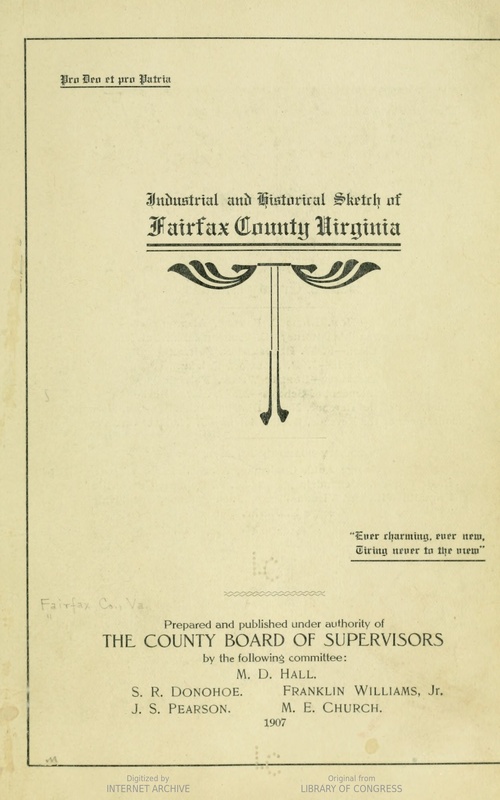
Cover page of the Industrial and Historical Sketch of Fairfax County, Virginia, 1907.
By the beginning of the twentieth century, Fairfax County officials developed new legal mechanisms to extend Antebellum ideologies and construct a racially exclusionary public policy. In 1907, the Board of Supervisors published a 100-page book, Industrial and Historical Sketch of Fairfax County, that promoted their vision of a modern Fairfax County. From its very first page, the message is tailored to appeal to moneyed outsiders, touting the local “climatic and topical advantages” and highlighting the county’s “special inducements for the investment of capital, and rare opportunities to the home-seeker, whether for agricultural, industrial, or residential purposes.”
Its pages reveal both how Fairfax leaders viewed the county and how they wanted outsiders to perceive it. The history it projects emphasizes plantation culture and Confederate heritage while omitting Indigenous and Black existence and contributions. Such representation is not neutral; rather, it is a political act. The book’s illustrations feature grand buildings, monuments, roads, bridges, and railroad depots, depicting a county cleansed of contributions by its darker residents and its uncomfortable pasts. Compounding this erasure, it features a section devoted to each of Fairfax’s White “towns,” describing its specific merits, while ignoring the presence across the county of similarly unincorporated Black communities. County officials’ omission of local African Americans reveals they were not considered contributing members to modern Fairfax.
The Industrial and Historical Sketch also stresses the region’s expanding infrastructure that boosted proximity to Washington, D.C. and emphasizes investment in railroads and related technologies that made it suitable for suburbs and the future commuters—by implication, White—who would inhabit them. It describes the incorporated town of Falls Church, for example (still subject to Fairfax County governance at the time) as the locus of both the Southern Railroad’s Bluemont Branch and the Old Dominion Electric Railway, enhancing its convenience for business or government workers. Another mark of modernization it highlights in Falls Church was local and long-distance telephone lines along with a telegraph office. The booklet features this public investment in technology as fostering a community of professionals and small businesses designed to support a suburban lifestyle. Indeed, in the first few decades of the twentieth century, Falls Church grew bustling with doctors, dentists, attorneys, stores, barber shops, real estate agents, plumbers, gas fitters, and at least a dozen contractors and builders. Fairfax officials constructed a story to attract a preferred citizenry and invested infrastructure accordingly, to make it true.
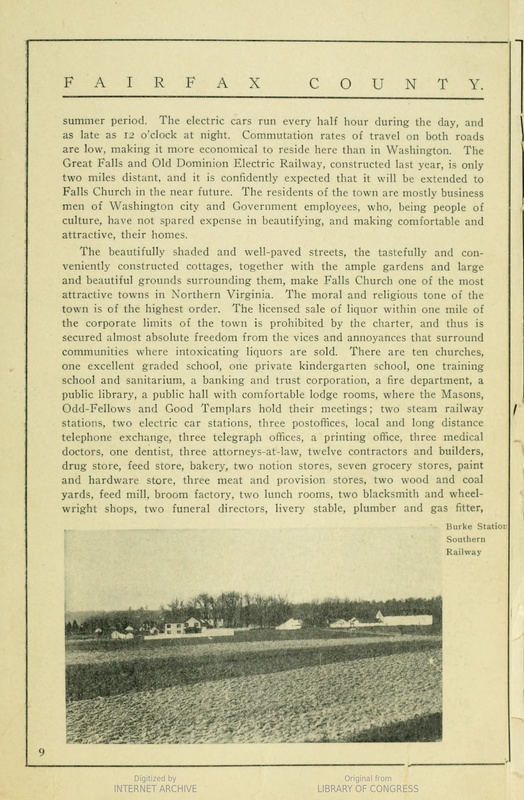
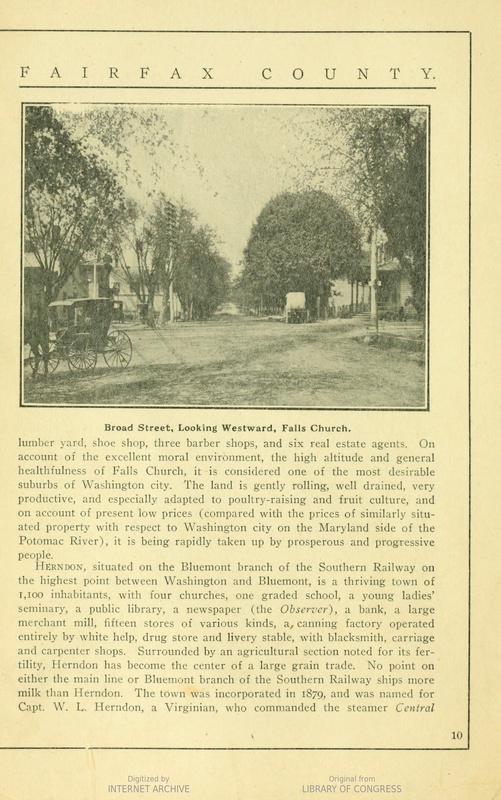
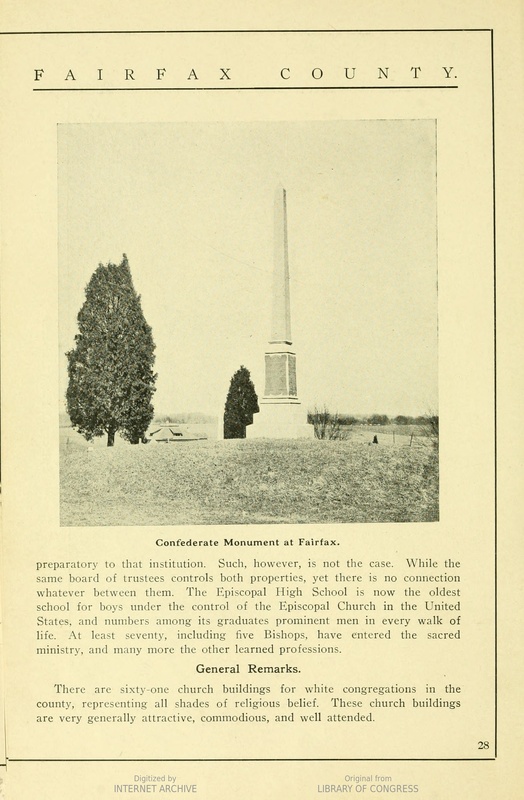
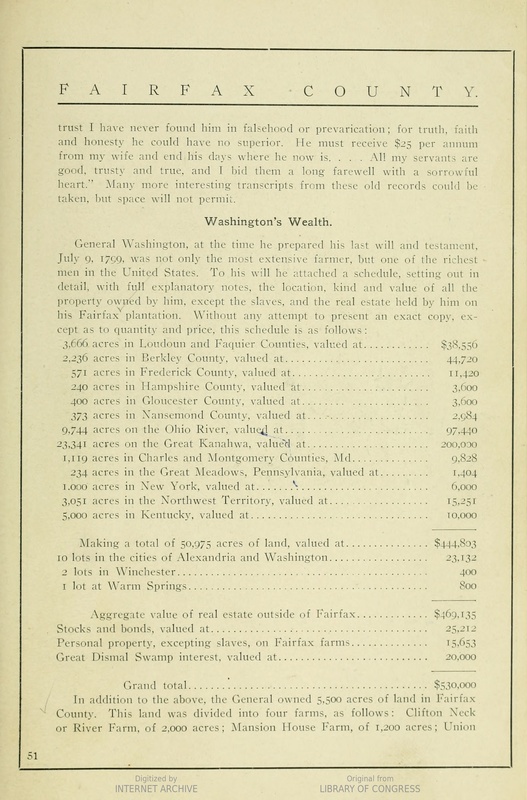
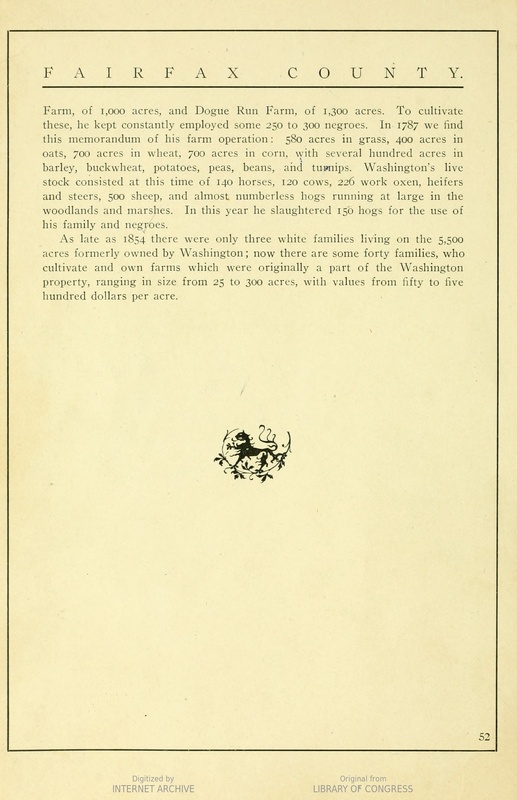
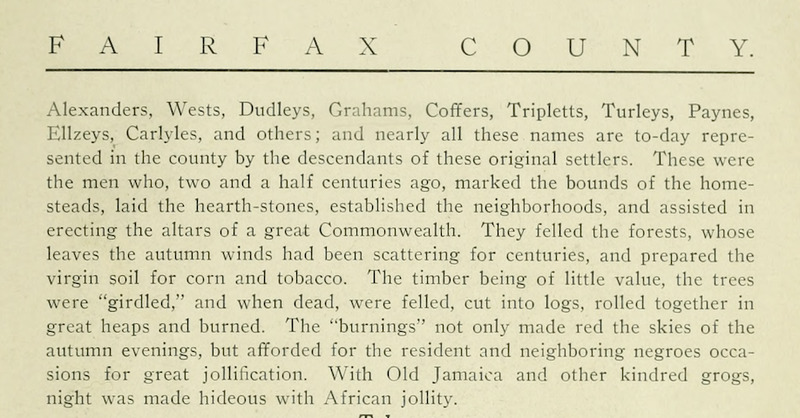
Excerpt with one of the only descriptions of African Americans in Fairfax County, page 39.
The 1907 Sketch’s few mentions of African Americans tend to be demeaning: They refer to enslaved Black people’s “jollity,” “stalwart negro oarsmen” crossing the Potomac, George’s Washington’s keeping “constantly employed” some 200 laborers (enslaved), and the existence of two Black churches. The county’s numerous Black schools, businesses, civic societies, and communities merit no mention. Also omitted are rampant segregation, disenfranchisement and other abuses prevailing locally under the discriminatory racial regime widely known as "Jim Crow." In the Fairfax County Board of Supervisors’ idealized Virginia of the Sketch, Black life had no place, and African American residents were excluded from the county’s investments in modernity.