
Stotts Legacy
The Stotts did not experience the benefits promised to other “planners, school officials, and nearby citizens” of Fairfax. They were left out and left behind. Vacating due to housing hygiene codes led to the seemingly inevitable loss of their property—a loss that is emblematic of the struggles faced by African Americans in Fairfax. Land tied to their families, often acquired shortly after the Civil War, remained largely undeveloped until the post-World War II era. When the land finally attained significant value in the mid-century, the suburban neighborhoods that came to cover it not only excluded these landowners but often triggered the erasure of their inheritance. The history of Black homeowners like the Stotts has been long forgotten by some and unknown to most, until now.
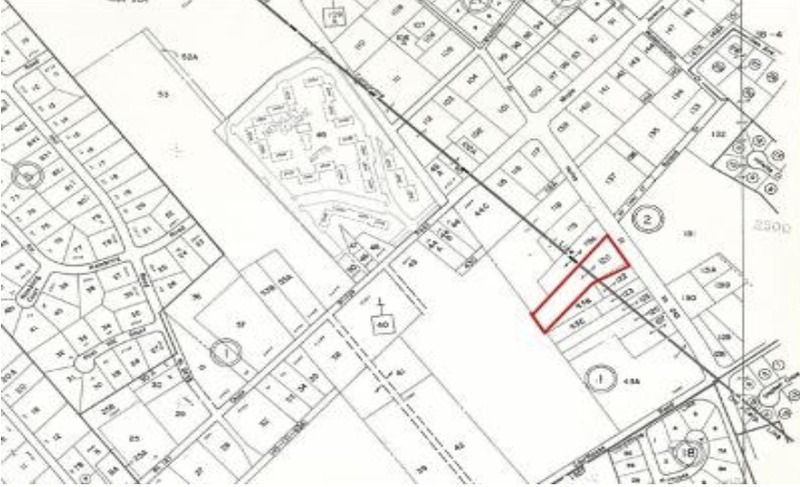
The highlighted area on this 1966 county tax map outlines Brooks family land that Emma Stotts and her two teen-aged sons were ordered to vacate due to housing hygiene codes. Credit: Fairfax County Circuit Court Historic Records Center.
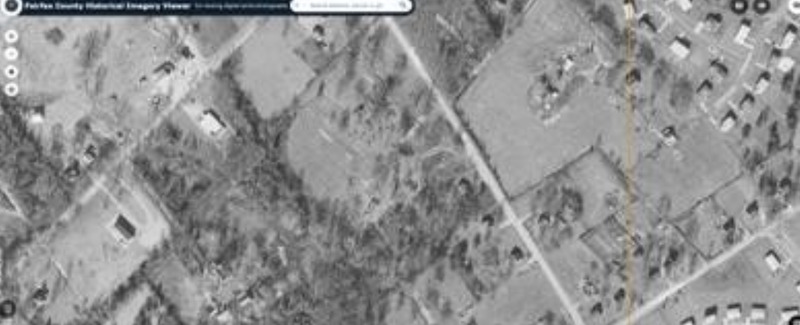
Approximate location of Stotts House, 1960. Fairfax County GIS (Geographic Information Systems) Historical Imagery Viewer.
Economically disadvantaged residents, especially African American families like the Stotts, experienced repeated neglect and decades-long disinvestment in their neighborhoods. Four years after the zoning loophole debacle, a similar incident unfolded. In 1969, the “Fairfax County Board of Supervisors unanimously rejected ...the single largest plan for public housing ever proposed...a 169-unit development southeast of Dulles Airport.” At the same time, they also rejected a public housing proposal for “115 town houses and 54 single family homes in Chantilly.” The adoption of large-lot zoning and minimum lot size requirements effectively barred racial minorities and low-income individuals from accessing the full resources of suburban Fairfax. The adverse impact of zoning ordinances on Black and economically disadvantaged communities was not a secret. The devasting consequences were well articulated in real time. For instance, a 1968 report from the National Commission Urban Problems noted that “intentionally or not, zoning law bar[red] racial minorities and poor people from America’s suburbs.” The report also detailed a range of factors that facilitated inequality, including “large-lot zoning, which creates and maintains exclusive neighborhoods and communities,” speculation of land “based on values created by zoning,” which inevitably drove up the housing prices to a level few could afford, discouraging and obstructing industries that would bring a significant number of unskilled workers and the ubiquity of bribery and corruption in rezoning cases. The last problem was especially resonant given that three Board of Supervisors were charged with corruption in rezoning cases and imprisoned. Graft and entrenched racial biases hindered progress.