
A History of the Pines
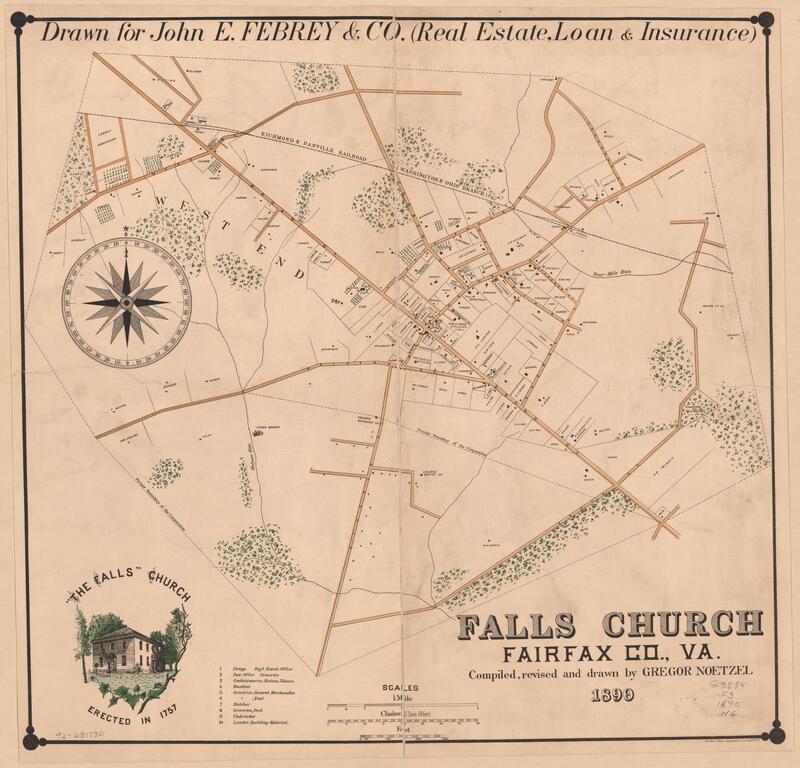
Falls Church, Fairfax County, VA
The Pines was one of several hamlets near Falls Church, along with Williamstown and Merrifield, centered on long-established Black institutions. By the early 1880s, as freed former bondspeople migrated northward, Fairfax County's Black community was growing. Some of those who settled in Northern Virginia were able to buy land from White landowners willing to sell to them, whether for financial or ideological reasons or a combination. In Merrifield, now often referred to as Mosaic, one of the sellers was a former Union Army officer and landowner, Robert Porter, was one of them. In addition to farms and households in Merrifield proper, the area’s Black population was augmented by the turn of the twentieth century by a community that formed in 1905 off Woodburn Road, known as “the Pines.” William H. Collins, Jr., a veteran of the Spanish-American War, got it going with his purchase of twenty-two acres, which he parceled out among siblings and others.
Collins, according to an oral history provided by a granddaughter who, had served with Teddy Roosevelt’s Rough Riders Tenth Cavalry in Cuba, “breaking horses,” among other duties. “But he also saved his money from that stint in the service and he bought the land over there” in the Pines, said the granddaughter, Dolly Hill. Collins, whom she spent time with as a child, until his death in 1953, was “the type of person that actually believed in saving money, and you know owning things – you earn what you had, you had to earn it."
The war veteran’s stake grew into a tightly knit community. Most members worshiped at the nearby First Baptist Church of Merrifield (a mostly Black congregation still active today), sent their children to the Merrifield Colored School, and recreated at Merrifield’s all-Black Oddfellows social club, built in 1912. All of the activities bound the extended Black community together. Fairfax historian Marion Dobbins, part of the next generation to grow up in the Pines, recounts community gatherings in the home of Collins’ daughter, Myra Lee and Myra’s husband Roscoe, who were her grandparents. After church on Sundays, she recalls, dozens would gather around her the Lees’ piano (her uncle led First Baptist’s music program) for singing, hearty meals, and fellowship. She grew up sledding there with cousins and playing under the trees that gave the settlement its name, her forebears resting in a burial ground nearby. All of which explains the family’s devastation, in 1964, when “the county came in [and] they told my grandmother she had 90 days to get out because they were going to build a school there”—an integrated school, ironically, that, in a still greater irony, was never built.
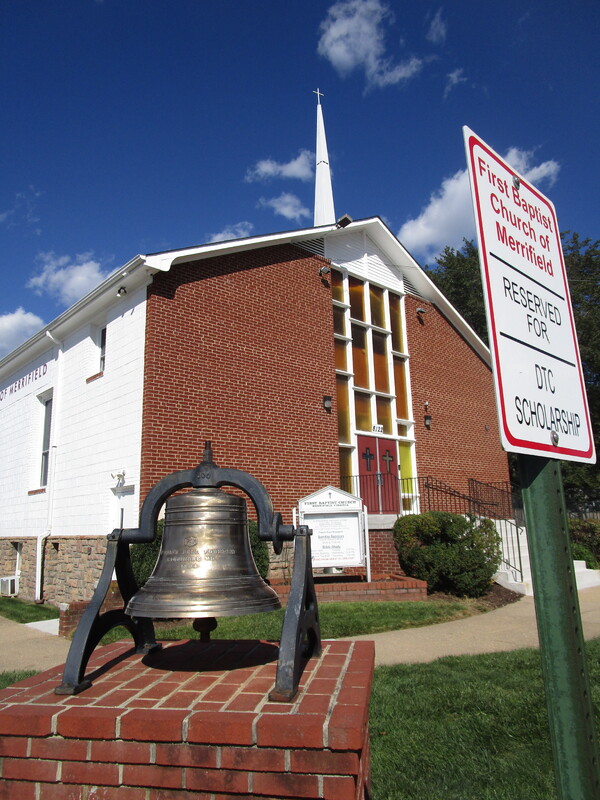
First Baptist Church of Merrifield, present day.
A reporter for the Washington Post, Jacqueline L. Salmon, in 2000 describes county officials’ demand that the Lees and Collinses and their neighbors sell their land “or see it condemned.” Proving that officials knew full well whose community they displaced, Salmon quotes internal county memos that referred to the Pines as “the colored property” and referred to homes there with the dismissive “none [with] a very high value. Residents’ finances were overturned along with their social ties. The loss of inherited property threw them at the mercy of (as this paper has described) a brutally tight market for affordable Black housing. The county action wiped out generational wealth and retirement security, as Dobbins explains:
My grandmother [and grandfather], although they had owned the land in the Pines and didn’t have a mortgage and would have been very comfortable in their senior life, then had to go and mortgage to get money enough cause the county did not pay them enough to build another house.
Exploiting an African American community’s economic precarity enabled a “bargain” to meet the public schools’ land needs through condemnation.
Compounding the Pines’ families’ loss, after the school project was abandoned, the site sat empty for years. Exxon corporation was permitted to dump earth and building materials (for a nearby headquarters construction) on the cemetery. Seeing the site unused for years prompted Collins relatives to hope for reinstatement. They hired an attorney to pursue it but made no headway. County schools would keep the land, an assistant superintendent explained to the Post, because it made “sound business sense … What goes up in value?” he added, answering, “Land.” The Mason District’s elected Supervisor, Penelope Gross, defended the county’s hold on the site to Salmon, noting it was acquired ‘through legal means’ for public use’” and remained “public space.”
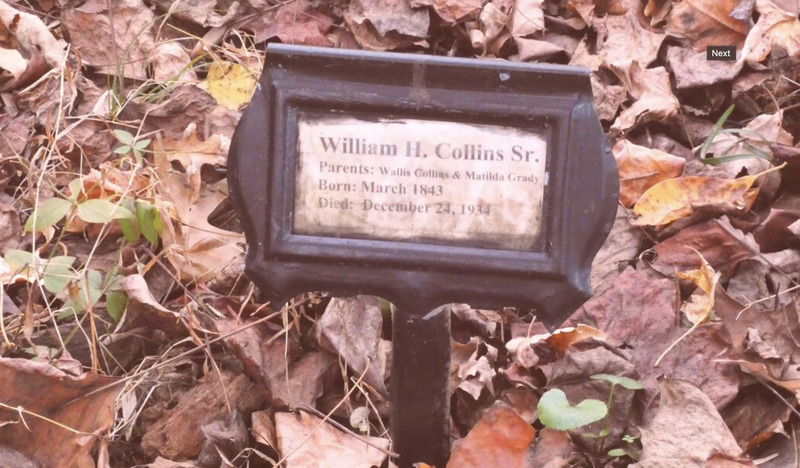
William H. Collins, Sr.'s grave marker in the cemetary which is all that is left of the Pines.
By the time the article ran, the grounds—by then called “Pine Ridge”—were in active use as playing fields and a community garden. Once subdivisions (mostly White) had risen around the site, the county heeded neighborhood demands to make it a park. What remained of the gravesite was restored, but the once cohesive community that created it could not be. As Dobbins lamented to Salmon, “You can’t … rebuild what was there. It’s gone.”