
Background: Pool History
In the late nineteenth century, men and women swam in separate pools.[1] By the 1910s, this practice began to end. However, due to intimate space of the pool, many White individuals did not want Black men swimming alongside White women.[2] Jim Crow laws and Plessy vs. Ferguson’s ruling of “separate but equal” allowed for separate pools for white and black residents. However, pool construction for Black residents was often delayed or poorly built and maintained.[3]
In the 1930s, fewer people went to government-run pools, and funding was often used for other projects instead of repairs. Many pools were closed instead of fixed, so public pools became rare. Records from Mr. Sullivan’s case show this was true in the Washington, D.C. area. The case stated that there were “very few public or local goverment owned swimming facilities in the Washington metropolitan area, and, as the evidence shows, they are virtually non-existent in Northern Virginia.”[4] At the same time, private and backyard pools became more common because new materials made them cheaper to build. Some private pools had rules that only White members could join.
Violence and intimidation were used to keep black residents out of pools. Black swimmers were splashed at, verbally harrased, and dunked. Despite these dangers, Black residents conducted swim-ins, including in the Freeman case, as a form of protest.[5]
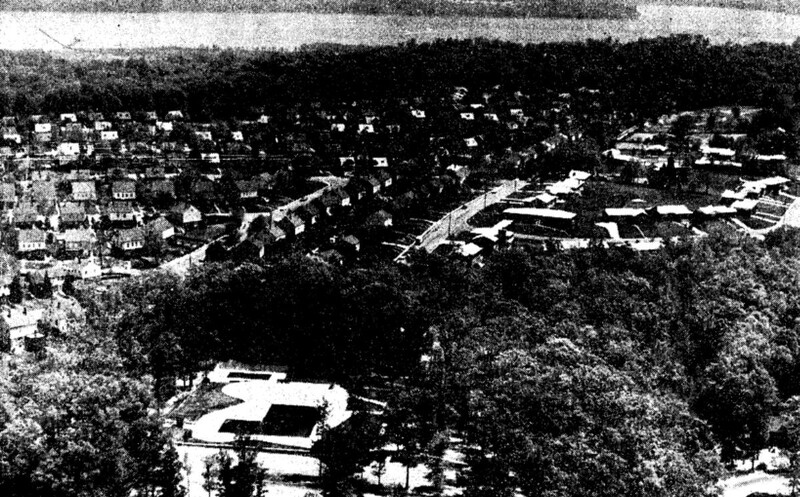
When Plessy vs. Ferguson was overturned by the Supreme Court in the case Brown vs. Board of Education of Topeka in 1954, pools should have been opened to all. Instead, many places closed pools. During the Little Hunting Park Case, a local resident shared his thoughts with The Washington Post. If the Little Hunting Park pool was integrated, he thought it should be closed.[6]
This national context frames Freeman and Sullivan’s court cases. However, Dr. Freeman and Mr. Sullivan were both shocked by the denied membership. Mr. Sullivan stated he had an “inability to believe” the basis of the decision. He felt racial discrimination to be a sin” and that “to collaborate in racial discrimination” was something he couldn’t “conscientiously do.”[7] Dr. Freeman was surprised stating that he had “lived in a similar community in Wisconsin, and there was no antagonism. Nobody bothered me.”[8]
[1] P. Caleb Smith, “Reflections in the Water: Society and Recreational Facilities, A Case Study of Public Swimming Pools in Mississippi,” Southeastern Geographer 52, no. 1 (2012), 40, http://www.jstor.org/stable/26228994.
[2] Jeff Wiltse, “Swimming against Segregation: The Struggle to Desegregation,”13; Smith, “Reflections in the Water,” 40, 42-43.
[3] Virginia Museum of History and Culture, “The World of Jim Crow.” https://virginiahistory.org/learn/civil-rights-movement-virginia/world-jim-crow.; National Archives, “The Impact of racial discrimination on Black American Lives in the Jim Crow era.” https://www.archives.gov/legislative/resources/education/impact-of-racial-discrimination-in-jim-crow-era.; "Plessy v. Ferguson," Oyez. https://www.oyez.org/cases/1850-1900/163us537.
[4] Sullivan, No. 22751, 66.
[5] Wiltse, “Swimming against Segregation,” 14; Freeman Jr., Lucky Diplomat, 119-120.
[6] Kevin Klose, “Pool Bias Dispute Splits Fairfax Community: 4-Year Battle Leaves Many Social Scars,” The Washington Post, Times Herald (1959-1973), July 28, 1969. ProQuest Historical Newspapers.
[7] Sullivan, No. 22751, 22, 31-32.
[8] Freeman, No. 22752, 21.
Legal Terms on This Page:
-
Jim Crow - Laws that were implemented in the later half of the 19th century that enforced racial segregation, imposing restriction on the daily lives of African Americans. Examples include forbidding intermarrage and segregating spaces. The use of the term "Jim Crow" comes from a minstrel show of the same name.
-
Plessy vs. Fergusson - A court case that on May 18, 1896 ruled that separate but equal facitlities were constitutional segregating white and black individuals. It upheld racial segregation as well as Jim Crow laws. African Americans became second class citizens and even with the phrasing of "seprate but equal" spaces were often separate but not equal. Spaces for African Americans were often not as nice or as well maintained as spaces for white individuals. The decision would be overrulled in Brown vs. the Board of Educaiton on May 17, 1954. Despite its overturnning, desegregation of spaces took time and was often contencious. Read about the desegregation of pools that started in Fairfax County by reviewing the Little Hunting Park Case.
-
Segregation - the separation or isolation of a race, class, or ethnic group by enforced or voluntary residence in a restricted area, by barriers to social intercourse, by separate educational facilities, or by other discriminatory means.
-
Brown vs. Board of Education of Topeka - Case heard by the Supreme Court in 1954 that ruled that separte but equal facilities violated the Equal Protection Clause of the Fourteenth Amendment.