
Fairfax County: A History of Housing Inequality, Exclusion, and Erasure
The history of our region’s modern suburbia rests on post-Civil War foundations on which a century of federal, state, and county policies laid the groundwork for systemic housing exclusion and segregation. Driving these disparities, this study outlines the effects of four structural mechanisms that converted private bias into public policy: racial bias in property ownership, built-in lending discrimination, the publicly "marketed" American Dream, and a culture of clearance.
This report shows how these mechanisms helped lead to the present crisis of housing affordability and accessibility in Fairfax County.
Explore
Confronting the Roots of a Troubled Landscape:
An Introduction to the History of Fairfax's Housing Inequality
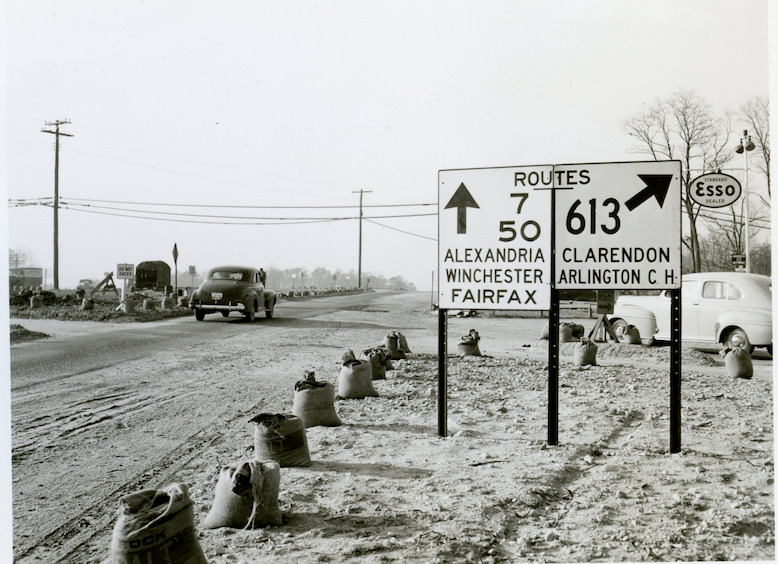
Directional signs near Falls Church, 1947.
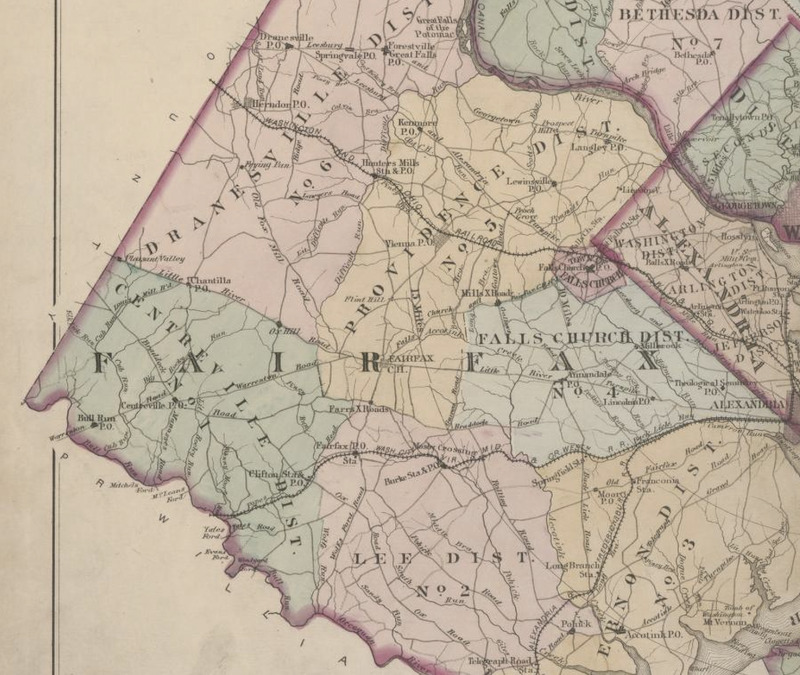
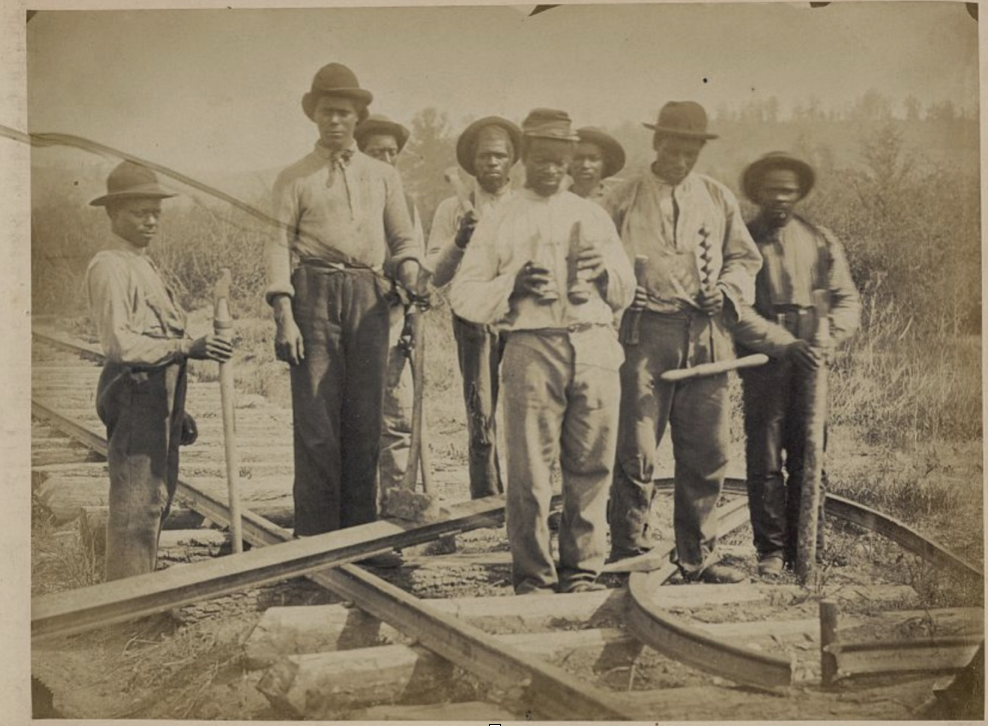
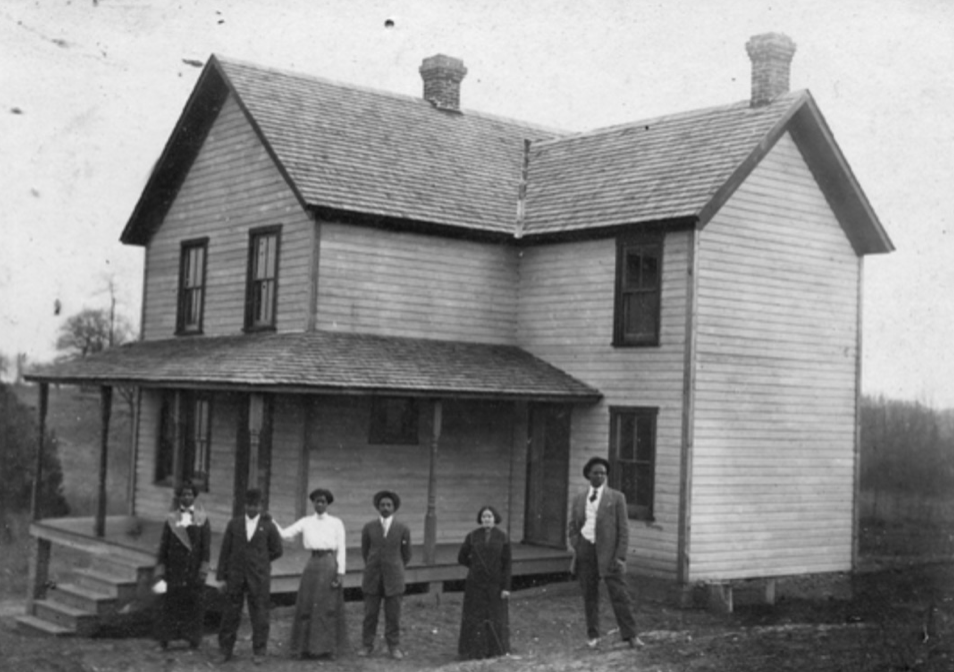
The historic and multifaceted causes of inequality in Northern Virginia defy a simple chronology or neatly thematic telling. To help explain why the availability and affordability of housing remains a thorny, racially inflected problem today, therefore, this paper therefore attempts both. It delves into a closely researched history of local development as far back as the Civil War to understand the socioeconomic and cultural forces that shaped local economies and society over time. And it highlights a fact of Fairfax County development usually omitted from the county’s over-arching narrative of “affluence and progress:” the presence, persistence, oppression and resistance of local Black communities. Their roots – staked through the operation of farms and small businesses, family ties, church and community organizations and, notably, land ownership – predate “suburbs,” subdivisions, and indeed, most populations and demographic groups that call Fairfax home.
This interpretation does not just challenge but helps explain how a story of linear “progress and prosperity” came to dominate the narrative of Northern Virginia’s development. Only by questioning assumptions about race-blindness and official neutrality, do we see the many ways that the process of “suburbanization” itself advanced socioeconomic inequity. Teasing out strands of race and culture bias woven into policy terminology (the use of “blight,” for example, to officially denigrate populous Black areas) reveals the long-term hoarding of public and private resources for elites – overwhelmingly White middle class residents, often recruited from out-of-state. In a self-perpetuating loop, segregation and exclusion walled off economically disadvantaged and even middle class people from “suburbia’s” benefits, leading to homogeneous spaces deemed “ghetto,” further fueling racist stereotypes and driving policies favoring the affluent.
While terms like “slum” and ghetto may seem familiar, no similarly universal short-hand exists to define the privileged, mostly White residential areas fostered by suburbanization’s public-private alliance. For this, we are using “islands of advantage,” an idea borrowed from the “islands of disadvantage” formulation in the 2023 study of poverty in our region undertaken by Virginia Commonwealth University and the Northern Virginia Health Foundation. Fairfax’s predominant historic narrative shines light on such islands while overlooking their monopolizing of county services and privileges, leaving around them a proverbial sea of under-resourced, largely segregated communities struggling against rough socioeconomic currents.
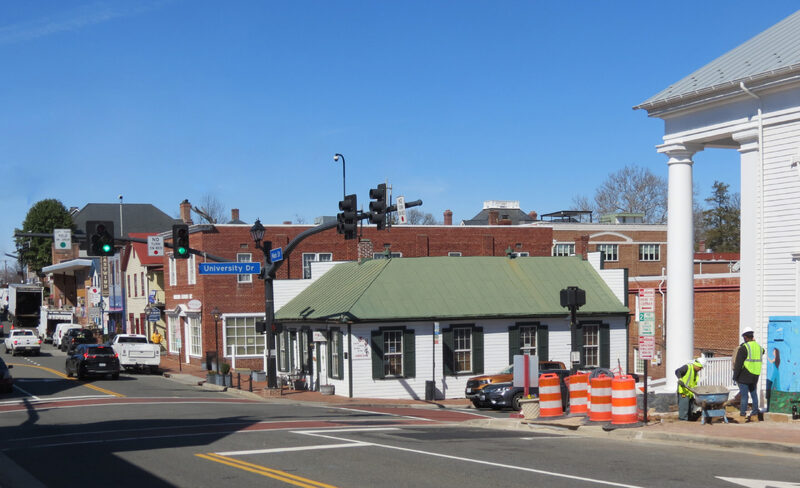
City of Fairfax's Historic District in 2023.
The history of our region’s modern suburbia rests on post-Civil War foundations on which a century of federal, state, and county policies laid the groundwork for systemic housing exclusion and segregation. Driving these disparities, this study outlines the effects of four structural mechanisms that converted private bias into public policy. The first of these enabled racial bias in property ownership, starting in the 1890s with segregationist “covenants” attached to home deeds – a contractual mechanism of prejudice that reached full flower in later decades as government-approved zoning. A second structural tool for exclusion worked through built-in lending discrimination: Federal actuarial systems steered banks, builders, and real estate agents to promote White, single-family neighborhoods while, through processes like redlining, financially starving communities of color, multifamily complexes, and other alternatives. The third structural mechanism ennobled these forces as badges of the publicly “marketed” American Dream that pathologized non-single family home living. Starting in the 1920s, federal messaging, policy, and public-private funding endorsed racially homogenous, single-family neighborhoods as more wholesome than multi-unit dwellings, stirring antipathy against renters and an aversion to affordable housing that prevails today. Fourth and last, a culture of clearance helped capitalize these biases through the routine displacement of Black communities. Public under-resourcing led to dilapidated infrastructure in older communities, providing justification to erase areas deemed “blighted” and turn them to purposes more profitable for others, whether public (like roadbuilding), popular (ballfields or parks), or remunerative (businesses or middle class subdivisions).