Geographies of Inequity
Spring 2023 Student Exhibits
These are the culminating student web exhibits from "Black Lives Next: Geographies of Inequity," a course created and taught, in Spring 2023, by Dr. Wendi Manuel-Scott and Dr. George Oberle.
A multi-disciplinary research seminar including undergraduate and graduate students, the course emphasized creative ways to locate "lost" Black geographies and reconstruct them. This stress on the geography and materiality of Black lives lets us illuminate people and subjects traditionally considered "hidden" or unrecoverable due to a dearth of traditional sources such as diaries, estates, and correspondence. Applying these frameworks to Northern Virginia histories engaged students with broad legacies of the Atlantic slave trade across Virginia and U.S. history, work they turned into original exhibits on the Omeka online platform (which you are viewing now).
Four antiracist frameworks undergirded the course: geospatial visual technology, Black digital humanities, critical library studies, and Black feminist praxis. Students learned to question the notion of geographic space as a static entity and investigate instead the legacies of racial displacement and erasure as a way to answer the essential question, How do the ongoing logics and structures of slavery continue to produce inequality in and around George Mason University? Through multiple modalities and interdisciplinary frameworks, students learned to build "spatial stories" around marginalized historic actors. They studied how people from different social classes produce space (the plantation and the slave ship, for example) based on societal position, and how similar power relationships later shape archives. As a response and intervention, the course presented the alterability of space through examples of Black resilience, resistance, and survival. These ideas were reinforced by readings of theorists including Katherine McKittrick and Saidiya Hartman, including McKittrick's argument that "Black lives are …geographic" and Hartman's invitation to consider Black bodies as "sites of possibility."
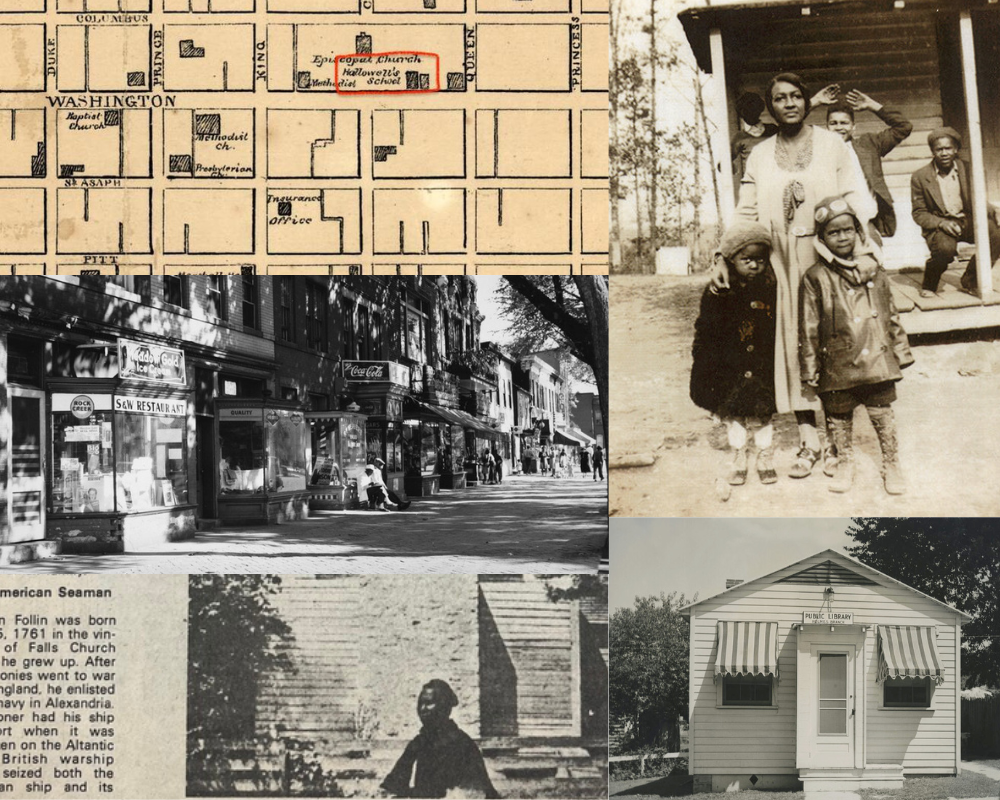
Student fieldwork including, in addition to learning to use newspaper archives, delving in local archives and repositories, for sources including censuses, wills and their inventories, deeds, and other court records, as well as voter rolls, tax logs, and above all, maps. Students learned to add these newfound sources, with appropriate metadata, to a new digital collection managed by the Center for Mason Legacies while also turning their findings into Omeka exhibitions. The best of these were singled out for awards and presented by their authors at an end-of-semester public symposium.
Manuel-Scott, Oberle and the CML team were able to develop this collaborative course and its novel antiracist pedagogy in part thanks to a LYRASIS "Catalyst Grant" awarded in 2022-2023.