-
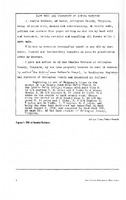 The Bottom: An African American Enclave Rediscovered
-
Funeral Program for Evelyn Syphax
Program for the funeral of Evelyn Reid Syphax, held at Mount Olive Baptist Church on Sunday and Monday, March 19-20, 2000.
-
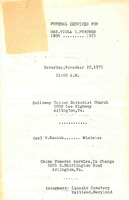 Funeral Program for Viola Funches
Program for the funeral of Viola C. Funches, held at Calloway United Methodist Church on Saturday, November 22, 1975, and officiated by Rev. Carl W. Renick.
-
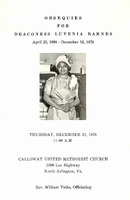 Funeral Program for Luvenia Barnes
Program for the funeral of Luvenia Barnes, held at Calloway United Methodist Church on Thursday, December 21, 1978, and officiated by Rev. William Vicks.
-
George L. Vollin Jr. Interview
This is a transcript of an oral history interview with George Vollin, originally recorded on audio cassette tape March 10, 1992.
-
Joan Mulholland Interview
This is a transcript of an oral history interview with Joan Mulholland, originally recorded to audio cassette tape on September 2 and December 11, 2008.
Subject(s):
Arlington Public Schools (Arlington, Va.)
Congress of Racial Equality (CORE)
Desegregation
Mulholland, Joan Trumpauer, 1941-
-
The Personal Papers of Dorothea E. Abbott, 1950-1999
The personal papers described in this guide are those collected and generated by Dorothea E. Abbott of Arlington, Virginia, in the course of her research about Arlington and other Virginia localities, Florida, Martha and George Washington, and other topics of interest to her. The collection includes notes, clippings, brochures, phtographs, photocopies of newspaper and magazine articles and drafts of her historical articles.
-
Capt. Carl Porter Interview
This is a transcript of an oral history interview on audio cassette tape, recorded on March 5, and March 26, 1975, relating to the Columbia Pike neighborhood.
-
Walter De Groot Interview
This is a transcript of an oral history interview with Walter De Groot, originally recorded to audio cassette tape recorded on June 30, July 12, August 6, and August 22, 2004. Includes information and discussion of the Columbia Pike neighborhood. One of the interviews was conducted during a walking tour of Columbia Pike in Arlington County.
-
Frank L. Ball Interview
-
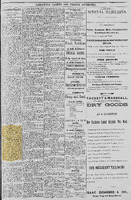 The Race Question
-
 Alexandria Gazette on April 1, 1895
See highlights in attachment.
-
 The Death of William F. Gardner
FATALLY SHOT: William F. Gardner a colored laborer, twenty-six years, was shot and fatally wounded at Arlington yesterday afternoon bybard Ross, a colored constable from whom Gardner was trying to escape while under arrest. Gardner had armed himself with a knife and was rushing at the constable to kill him when the officer fired. The wounded man was taken to the Emergency Hospital, Washington. Gardner is a single man, and lived with his mother in the county near the cemetery. About a month ago he was sent to jail in this city upon a minor charge, it being thought at the time that he was mentally irresponsible. The ball from Ross's pistol entered Gardner's body near the heart,
aud his recovery is impossible.
-
 Black Community is an Emerging Force in Arlington (1974)
-
 A Chink in the Armor: The Black-Led Struggle for School Desegregation in Arlington, Virginia, and the End of Massive Resistance
-
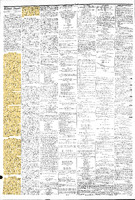 Commentary on Race Relations, May 20, 1869
-
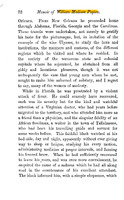 Memoir of William Madison Peyton
-
Friendly Cab Company, 1947
-
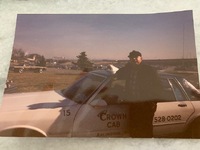 Hartman Reed, one of the first Black cab drivers in Arlington
-
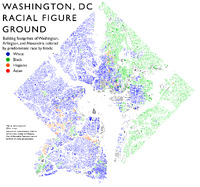 [Untitled]
-
 [Untitled]
-
 [Untitled]
-
 [Untitled]
-
Housing Segregation: Nowhere to Live
Intro:
In 2016, Chris Fullman closed on his house in Richmond’s Lakeside. After signing the papers, his closing attorney handed over a copy of the covenants and one of the items caught him by surprise.
Fullman told Virginia Public Radio, “the second item on the list was basically, if you’re not white, you can’t live, rent, or do anything on this land unless you work for the property owner.”
-
DeAnna Beane talks about her involvement in the Civil Rights Movement in Arlington, Virginia in the 1960s
A portion of the interview transcript, which relates to Arlington, VA:
"I guess Chicago was where the activist in me began to emerge. No I guess it emerged before then. Hadn't thought about it but when we lived in Arlington, that was during the beginnings of the Civil Rights Movement. And Arlington, Virginia was very segregated. That's where our church was, very segregated.
Okay, now wait a minute. I want to try to follow chronology. I'm not sure where--so after you left Chicago, after he got his Ph.D. [degree] in Chicago, you all moved to New Jersey first?
Yes, but what I want to say is I missed a piece of life. I don't know if it's, if it doesn't matter. I mean we can leave it out.
Okay.
When, when I was--those years when I was at Howard [University, Washington, D.C.] and I was a minister's wife, our church was in Arlington, Virginia. So we were there four years. And in that four years, the Civil Rights Movement came to Arlington. And we were asked what do you want to change in your community? I can't remember if it was my husband's influence or what, but the group decided we want the movie theaters open to our children. And so that's what we did. You know we picketed and demonstrated. And the American Nazis party had its headquarters about a half a mile down on Lee Highway from our church.
Now this is led by the infamous George Lincoln Rockwell.
Rockwell, yes. I had the pleasure of being tormented by him and his Nazis. They would picket opposite us with signs that said Niggers go back to Africa and all sorts of things. And then the state legislature in Virginia passed a law saying picketing was illegal. And we decided to test it. I'm trying to remember if we were working with SNCC [Student Nonviolent Coordinating Committee] CORE [Congress of Racial Equality], I cannot remember, it was one of the two.
So do you--now this would have been in 196--what?
'62 [1962].
Two, okay, now I'm, I'm wondering if--now who actually came to Arlington to represent the movement? Was it someone from--is that what you're trying to--
Yeah, it was either SNCC or CORE, and I--
I'm thinking it sounds like CORE to me, but I don't--
Okay, I, I just cannot remember. They asked what is it we wanted to change. And once we told them, then they told us the strategy. And the thing that I was trying to remember was who helped us. I was arrested. They had--we had to pick a couple of people from the community to test the new law. And they decided the minister's wife would be a good candidate. She had some credibility. And there were a couple of us, another woman and I think two or three men. And so we were arrested while we were picketing, treated very kindly by the police. Fingerprint--taken to the station and fingerprinted, all of that. And the, the organization that was helping us said don't worry, we'll have a good lawyer. And I, I'm drawing a blank on his name."