-
Charles Drew Lived Here - The "father of the blood bank" grew up in Arlington. And his legacy is lasting.
-
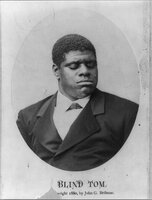 Thomas ‘Blind Tom’ Wiggins, Musician, and Composer (b. 1849)
Blind Tom Wiggins, a Black composer and pianist, was born on May 25, 1849.
From Columbus, GA., he was born with a condition that today's doctors might diagnose as "autistic savant,” one of only about 100 cases recorded in medical history. James Bethune of Columbus, Georgia, purchased Tom’s father, Domingo Wiggins, a field slave, and his mother, Charity Greene, at auction when young Tom was an infant. Because he was the blind (disabled) sickly "pickaninny," and had no labor potential, he was thrown into the sale as a no-cost extra. Though Tom's parents were married, the prevailing custom of the time dictated that female slaves and their children retain the names of their owners, hence the name Thomas Greene Bethune. Bethune was a white veteran of the Mexican War, a practicing lawyer, and a newspaper editor at the Columbus Times.
For the first several years of his life, his only sign of human intelligence was his interest in sounds and his ability to imitate them. Charity was allowed to bring Tom to the main house where she worked for the Bethune family, a family of seven musically talented children who overflowed their home with singing and piano playing. When the Bethune children practiced their piano lessons, Tom listened. Once given access to the keyboard, Tom astounded the family. With his small hands and fingers, he could reproduce the sequence of chords from his memory exactly as he had heard them play. By age six, Tom had started improvising on the piano and creating his musical compositions. He would claim that the wind, rain, or the birds had taught him the melody. Even though a local music teacher told Bethune that Tom's musical abilities were beyond comprehension and his best course of action was to let him hear fine playing, Bethune provided Tom with various music instructors. One of Tom's music teachers later reported that Tom could learn skills in a few hours that required other musicians years to perfect. He began touring the United States at the age of eight and at the age of ten became the first Black musician to give a headline performance at the White House (for then-President James Buchanan).
In October 1857, "Blind Tom" performed before a large audience with difficulty comprehending how a blind slave child could master the piano keyboard. Slaves with musical talent meant income for their owners, and in 1858, James Bethune "hired out" Tom to concert promoter Perry Oliver for several years. It has been estimated that Bethune pocketed $15,000 from the arrangement and that Perry Oliver made profits amounting to $50,000. Now, at age nine, Tom was separated from his family and exhibited throughout hundreds of cities on a rigorous four-shows-per-day schedule. Not only could Tom perform world classics, he would overwhelm his audiences by turning his back to the piano and giving an exact repetition a reversal of the keys the left and right hands played.
Musicians in the audience were invited to challenge him musically. Tom could reproduce on the keyboard any music a challenger would first perform. Taking that feat one step further, he could play a perfect bass accompaniment to the treble played by someone beside him the first time he played it. Tom would often push the other performer aside and repeat the entire composition alone. When audiences applauded, Tom followed suit, impersonating the sounds of approval.
One of the earliest concert reviews published in the Baltimore Sun on June 27, 1860, announced to its readers that Tom was a phenomenon in the musical world, "thrusting all our conceptions of the science to the wall and informing us that there is a musical world of which we know nothing." A command performance before President Buchanan at the White House drew further attention and the press referred to him as the greatest pianist of the age, whose skills surpassed Mozart. In January 1861, Perry Oliver and Tom were in New York when news broke of Georgia's secession from the Union. Canceling further New York engagements, Perry Oliver and Tom retreated, and Tom's talents would be used in the South, giving concerts for Confederate soldiers and raising money for the Southern cause.
After the Battle of Manassas, Tom and his manager were confined in Nashville for several months, and after hearing the battle discussed for several weeks, Tom sat down at the piano and produced a composition incorporating melodies representing the Union Army, the Confederate Army, and Confederate and Union leaders Beauregard and McDowell. The composition became a popular signature piece and a favorite with concert audiences in the South. In 1862, General Bethune took up managing and traveling with Tom, always attempting to keep far south of the Union army lines and out of the line of fire. Noted writers such as Rebecca Harding Davis kept the word of Blind Tom alive in the North. They fascinated readers of the prestigious Atlantic Monthly with a report on Tom's abilities.
Foreseeing that the South would soon fall to Union domination, General Bethune arranged for Domingo and Charity to sign a contract giving him the management of Tom until he reached 21. Tom would receive food, shelter, musical instruction, and a $20 monthly allowance. The surviving parents would receive $500 a year plus food and shelter. Bethune would retain over 90 percent of the remaining profits from Tom's performances. conservative estimates place that amount at $18,000 a year. After the War’s end, Tom was dispatched on another tour, which included appearances in major cities of the Northern states. One of the first in New Albany, IN, became a monumental news event.
Tabbs Gross, a Negro entertainment promoter sometimes described as the nation's Black P. T. Barnum, came forward, claiming Bethune had accepted his down payment toward an agreed upon $20,000 in gold for possession of Blind Tom. He further claimed Bethune later changed his mind without returning his full payment. With Tom in tow, the Bethune entourage hastily exited New Albany and fled to Ohio. Tabbs Gross and his lawyer pursued the Bethunes into Ohio. The civil case for ownership of Blind Tom's services came to court in Cincinnati with a flurry of newspaper attention lasting well over a week during July 1865. In this case, of a Black man pitted against a White man for possession of a Negro youngster, the judge rendered the decision in favor of Bethune.
On July 30, 1887, a federal court ordered General Bethune to surrender Tom at Arlington, VA, to his mother Charity Greene, and the General’s former daughter-in-law, Eliza Bethune. Newspapers reported that Tom, disappointed and grief-stricken at the thought of leaving Virginia and the old General, was threatening to "fight them all." On the surrender date, General Bethune's son, James, brought Tom to the courtroom. The family, which had made a fortune estimated at $750,000 at the hands of Blind Tom, gave possession of him over to his mother, Charity, a mother he hardly knew. Tom, who brought with him nothing more than his wardrobe and a silver flute, offered no resistance when he boarded the train to leave Virginia for New York and home with Eliza.
One month later, Tom was again on the concert stage, showing no signs of emotional trauma from his latest custody battle. Now a source of income for Eliza, who promoted him as "the last slave set free by order of the Supreme Court of the United States," Tom's performances continued throughout the United States and Canada. He now performed under his father's surname, Thomas Greene Wiggins. Except his brief reunion with Charity, who soon returned to Georgia, nothing else had changed. Tom spent the remainder of his life in the care of Eliza, continuing his performances, concerts, and vaudeville acts until 1904.
His last days were spent in seclusion, playing the piano and holding imaginary receptions. Tom died at age 59 on June 13, 1908, at Eliza's home in Hoboken. Mystery surrounds Blind Tom's final resting place. Some historians related that in a final victory for custody of Tom 20 years after his death, Fannie Bethune, the youngest surviving daughter of James Bethune, received permission to move Tom's body back to his old home in Georgia. They give his final resting place as the old Westmoreland Plantation just outside Columbus, GA, where a historical marker has been erected.
In 1992. Geneva H. Southall wrote three books on his life. Musician John Davis, who released a CD of Tom's music in 2000, claims that an examination of cemetery records at Evergreens Cemetery in New York indicates the body was never moved from its original unmarked grave. Thus, the controversy surrounding Blind Tom continues into the 21st century.
-
 Joseph Paul Reason (b. 1941)
-
 Esther Cooper Jackson (b. 1917)
-
U.S. Housing Policy Timeline 1865-2019
-
 1835-1836 Slave market of America
A broadside condemning the sale and keeping of slaves in the District of Columbia. The work was issued during the 1835-36 petition campaign, waged by moderate abolitionists led by Theodore Dwight Weld and buttressed by Quaker organizations, to have Congress abolish slavery in the capital. The text contains arguments for abolition and an accounting of atrocities of the system. At the top are two contrasting scenes: a view of the reading of the Declaration of Independence, captioned "The Land of the Free," with a scene of slaves being led past the capitol by an overseer, entitled "The Home of the Oppressed." Between them is a plan of Washington with insets of a suppliant slave (see "Am I Not a Man and a Brother?" no. 1837- ) and a fleeing slave with the legend "$200 Reward" and implements of slavery. On the next line are views of the jail in Alexandria, the jail in Washington with the "sale of a free citizen to pay his jail fees," and an interior of the Washington jail with imprisoned slave mother Fanny Jackson and her children. On the bottom level are an illustration of slaves in chains emerging from the slave house of J.W. Neal & Co. (left), a view of the Alexandria waterfront with a ship loading slaves (center), and a view of the slave establishment of Franklin & Armfield in Alexandria.
-
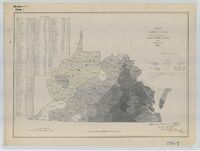 Map of Virginia Showing the Distribution of its Slave Population from the Census of 1860
This map was important to illustrate the unequal distribution of enslaved persons in the eastern and western counties of Virginia. This particular version of the map was modified to include Kanawha, the western part of the state of Virginia, which is shown in light green. The map shows the smaller percentages of enslaved persons living in the western portion of the state versus the eastern portion. This issue, in part, led the western counties of Virginia to breaking off and form the new state of West Virginia in 1863.
-
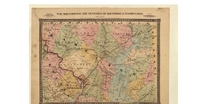 1861 War map, showing the vicinities of Baltimore & Washington
-
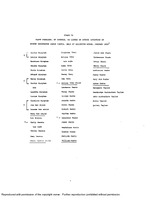 Arlington House January 1858 Slave Inventory
-
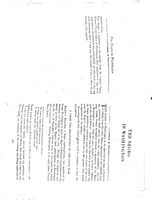 The WPA Guide to 1930's Washington, DC: The Negro in Washington
-
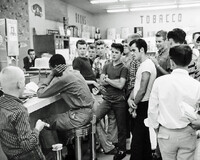 "Crazy Dion" Diamond experiences harassment during a civil rights sit-in at the Cherrydale Drug Fair in Arlington, VA June 10, 1960
Dion Diamond was known for doing solo sit-ins in the 1950's and got involved with civil rights groups to continue non-violent civil rights action.
-
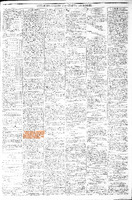 News Article about William Syphax land petition
-
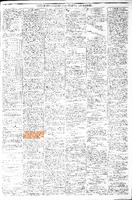 News Article about William Syphax land petition
-
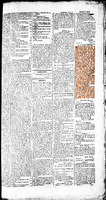 Runaway Slave Ad: March 18, 1813: "Thirty Dollars Reward"
March 18, 1813: Thirty Dollars Reward.
Ran away from Chestnut Hill, the residence of the subscriber, in Fairfax County, a Negro Woman named Hannah. She is about 26 or 27 years of age, rather above the middle stature, slender, and very black. Her wool was cut short on the fore part of her head, and she has lost one of her lower fore teeth. & the rest have a loose appearance. She is an excellent cook, and understands all kinds of house work. She ran away first in March 1812, was brought home, and went again in April, and staid till August, when she was taken up at the house of one Thorpe, in GeorgeTown, where she passed for a free woman, calling herself Mary, and was there put in jail—a short time after being brought home, she escaped again, and was for some time after in Alexandria and it is now supposed she is harbored by Mr. Custis’s negroes at Arlington, or is about the City or Navy Yard. She spent the whole fishing season last year at some of the fishing shores, and will probably do the same this year if in this part of the country—When she was brought home in August she had the appearance of expecting an increase to her family sometime about January, and if she has not destroyed it, she has probably a young Child now. I will give Twenty Dollars to any person who will secure her in Jail so that I get her again, & give information either to Mr. John Threlkeld near Georgetown. or to Mr. William Maznadier in Alexandria, or thirty dollars if taken at a greater distance from home than fifty miles. All persons are forwarned hireing or harboring said Negro, as the law will certainly be put in force against them.
-
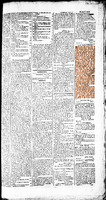 Runaway Slave Ad: March 18, 1813: "Thirty Dollars Reward"
March 18, 1813: Thirty Dollars Reward.
Ran away from Chestnut Hill, the residence of the subscriber, in Fairfax County, a Negro Woman named Hannah. She is about 26 or 27 years of age, rather above the middle stature, slender, and very black. Her wool was cut short on the fore part of her head, and she has lost one of her lower fore teeth. & the rest have a loose appearance. She is an excellent cook, and understands all kinds of house work. She ran away first in March 1812, was brought home, and went again in April, and staid till August, when she was taken up at the house of one Thorpe, in GeorgeTown, where she passed for a free woman, calling herself Mary, and was there put in jail—a short time after being brought home, she escaped again, and was for some time after in Alexandria and it is now supposed she is harbored by Mr. Custis’s negroes at Arlington, or is about the City or Navy Yard. She spent the whole fishing season last year at some of the fishing shores, and will probably do the same this year if in this part of the country—When she was brought home in August she had the appearance of expecting an increase to her family sometime about January, and if she has not destroyed it, she has probably a young Child now. I will give Twenty Dollars to any person who will secure her in Jail so that I get her again, & give information either to Mr. John Threlkeld near Georgetown. or to Mr. William Maznadier in Alexandria, or thirty dollars if taken at a greater distance from home than fifty miles. All persons are forwarned hireing or harboring said Negro, as the law will certainly be put in force against them.
-
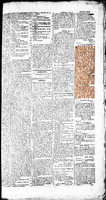 Runaway Slave Ad: March 18, 1813: "Thirty Dollars Reward"
March 18, 1813: Thirty Dollars Reward.
Ran away from Chestnut Hill, the residence of the subscriber, in Fairfax County, a Negro Woman named Hannah. She is about 26 or 27 years of age, rather above the middle stature, slender, and very black. Her wool was cut short on the fore part of her head, and she has lost one of her lower fore teeth. & the rest have a loose appearance. She is an excellent cook, and understands all kinds of house work. She ran away first in March 1812, was brought home, and went again in April, and staid till August, when she was taken up at the house of one Thorpe, in GeorgeTown, where she passed for a free woman, calling herself Mary, and was there put in jail—a short time after being brought home, she escaped again, and was for some time after in Alexandria and it is now supposed she is harbored by Mr. Custis’s negroes at Arlington, or is about the City or Navy Yard. She spent the whole fishing season last year at some of the fishing shores, and will probably do the same this year if in this part of the country—When she was brought home in August she had the appearance of expecting an increase to her family sometime about January, and if she has not destroyed it, she has probably a young Child now. I will give Twenty Dollars to any person who will secure her in Jail so that I get her again, & give information either to Mr. John Threlkeld near Georgetown. or to Mr. William Maznadier in Alexandria, or thirty dollars if taken at a greater distance from home than fifty miles. All persons are forwarned hireing or harboring said Negro, as the law will certainly be put in force against them.
-
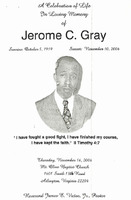 Jerome C. Gray Funeral Program
Program for the funeral of Jerome C. Gray, held at Mt. Olive Baptist Church on Thursday, November 16, 2006 and officiated by Rev. James E. Victor, Jr.
Funeral Programs located in “The Personal Papers of Birdie and Mabel Alston, 1905-2019.” Series 1, Funeral Programs, are over one hundred programs from funerals the Alston’s attended throughout Virginia and the Washington DC area. They contain information about the deceased’s life and family, and many include photographs; the deceased were part of the area’s Black community.
Birdie (1919-2020) and Mable (nee Shirley) Alston (1920-2017) were married neighborhood activists and prominent community members in the Halls Hill/Highview Park area. The Alston’s came to Arlington in 1944 and settled in Halls Hill in 1947
-
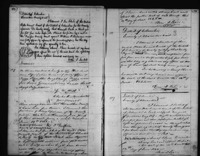 Emancipation Story 1822
Hannah Burk registered as free: “I Edmund I. Lee, Clerk of the United States Circuit Court of the District of Columbia, for the County aforesaid, Do hereby certify that Hannah Burk, a black girl, five feet four inches high, (who obtained her freedom by a suit in the Fairfax County Court against William P. Richardson as will more fully appear, by reference to the preceding paper) has this day been registered in my office agreeably to law,—
In testimony whereof, I have hereunto set my hand and offered the seal of the said Court this eight day of June eighteen hundred and twenty two."
Edm: I. Lee, CC.
(Examined)
-
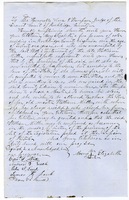 Petition for Re-Enslavement, 1860
Some free Black individuals chose to be re-enslaved, as a result of an act passed by the Virginia General Assembly in 1806 that required formerly enslaved people to leave the commonwealth within twelve months of being granted their freedom. In 1856, the General Assembly passed an act allowing free Black individuals who desired to remain in the commonwealth to petition for re-enslavement. These petitions include the petitioner's name, previous enslaver, means of emancipation, and desired new enslaver.
Mary Elizabeth’s petition: “To the Honorable Lucas P. Thompson Judge of the Circuit Court of Rockbridge County. Humbly complaining showith unto your Honor Your Petitioner, Mary Elizabeth, a free person of color residing in Rockbridge County Virginia over the age of Twenty one years, and who was emancipated by the last Will & Testament of the late William Miller, respectfully represents unto your Honor, that by the provisions of the said will she is now entitled to her freedom, but according to the laws of this State, if she becomes free, she will be compelled to remove to some other State, and this she is unwilling to do, as she was raised in the said County & desires to remain here. She therefore desires to choose a Master, & to become his slave, and she wishes to be allowed to choose the Son of her old master, William Miller, with whom she has always resided & who raised her from childhood. Your Petitioner therefore asks that her Petition may be granted and that the said William Miller may be confirmed as her owner in the mode & by virtue of the provisions of the Act of the Legislature passed at the Session of 1855-6. And your Petitioner as in duty bound will ever pray be.
her X mark
Mary Elizabeth
Signed & acknowledged in our presence.
Edwd. T Dix
Andrew J Leech
John S. Leech James K Leech James R Sterritt
-
 Manumission story; 1844
Julia Roberts, an enslaved woman, sues for her freedom. In an 1801 deed, Simon Sommers of Fairfax County and later Alexandria County promises manumission to Julia’s mother and future offspring at the age of 25. When subsequent enslavers refuse to free Julia, she turns to the courts to seek redress. Her case goes all the way to the Supreme Court, which rules in her favor.
-
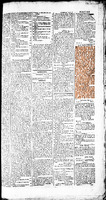 Runaway Slave Story, 1813
March 18, 1813: Thirty Dollars Reward.
Ran away from Chestnut Hill, the residence of the subscriber, in Fairfax County, a Negro Woman named Hannah. She is about 26 or 27 years of age, rather above the middle stature, slender, and very black. Her wool was cut short on the fore part of her head, and she has lost one of her lower fore teeth. & the rest have a loose appearance. She is an excellent cook, and understands all kinds of house work. She ran away first in March 1812, was brought home, and went again in April, and staid till August, when she was taken up at the house of one Thorpe, in GeorgeTown, where she passed for a free woman, calling herself Mary, and was there put in jail—a short time after being brought home, she escaped again, and was for some time after in Alexandria and it is now supposed she is harbored by Mr. Custis’s negroes at Arlington, or is about the City or Navy Yard. She spent the whole fishing season last year at some of the fishing shores, and will probably do the same this year if in this part of the country—When she was brought home in August she had the appearance of expecting an increase to her family sometime about January, and if she has not destroyed it, she has probably a young Child now. I will give Twenty Dollars to any person who will secure her in Jail so that I get her again, & give information either to Mr. John Threlkeld near Georgetown. or to Mr. William Maznadier in Alexandria, or thirty dollars if taken at a greater distance from home than fifty miles. All persons are forwarned hireing or harboring said Negro, as the law will certainly be put in force against them.
-
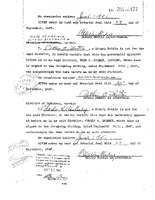 1947 Restrictive Covenants in Arlington Neighborhoods
Use of restrictive covenants proliferated Arlington’s neighborhoods. These covenants prohibited home sales to African American or Black Arlingtonians based on race and/or religion. For example, this deed dated September 24, 1947 for lots known as "Virginia Heights" stated, “5. No persons of any race other than the Caucasian Race shall use or occupy any building or any lot, except that this covenant shall not prevent occupancy by domestic servants of a different race domiciled with an owner or tenant."
-
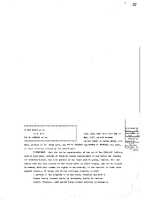 1937 Restrictive Covenants in Arlington Neighborhoods
Use of restrictive covenants proliferated Arlington’s neighborhoods. These covenants prohibited home sales to African American or Black Arlingtonians based on race and/or religion. For example, this deed dated May 21, 1937 for a Subdivision known as "Boulevard Manor" stated, “4. Neither said property nor any part thereof, nor any interest therein, shall be sold or leased to a negro, or a person of negro descent."
-
 Restrictive Covenants in Arlington Neighborhoods
The many Restrictive Covenants researched at Arlington County Courthouse listed restrictions related to property ownership, such as building type or a minimum cost of construction. However, the restrictions related to race, particularly against Black people varied in the language used to describe those not sanctioned to purchase property, such as “any person of African descent,” a negro, or a person of negro descent,” and “of any race other than Caucasian race.”
-
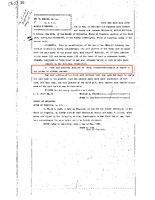 1921 Restrictive Covenant in Arlington Neighborhoods
Use of restrictive covenants proliferated Arlington’s neighborhoods. These covenants prohibited home sales to African American or Black Arlingtonians based on race and/or religion. For example, this deed dated May 5, 1921 for a tract of land known as "City View" stated, “1. That said property shall not be sold, transferred occupied or leased to any person of African descent."