-
Subject of Research
-
Development of Nauck Neighborhood
-
Story
-
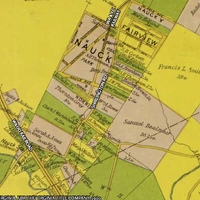
John D. Nauck purchased and subdivided a large section of Nauck. Born in Germany in 1846, Nauck immigrated to the United States ca. 1854. During the Civil War, he served in the Confederate Army as a Private. After the war, he lived in Washington, D.C., worked as an upholsterer, and married Martha Ann Webb in 1872. They purchased 46 acres from Rudolph Buckley and Emma Jones on November 5, 1874, and 23 acres from John and Mary Winsatt on December 21, 1875. The Naucks subdivided the land and lived on a parcel with their two children. Thomas N. Carter completed a survey entitled the "Map of the Town of Nauck, Alexandria County, Virginia (formerly known as Nauckville and Convalescent Camp)" on July 1, 1876, but it was not recorded until November 16, 1885. The community continued to be known by African Americans as "Nauckville" into the late-nineteenth century as evidenced by weekly articles in the Washington Bee.
[John D.] Nauck also held county positions such as Justice of the Peace between 1890 and 1891. Between 1880 and 1900, Nauck completed land sales primarily to African Americans, possibly even those leaving Freedman's Village. The Washington Post reported that Nauck had sold considerable property to African Americans in Alexandria County. Purchasers had paid him per an installment plan. Nauck fled the County when an African American resident of Nauck in arrears reportedly assaulted and threatened him and his family when he tried to evict him from their property in 1891. John Nauck died on February 2, 1925, in Washington, D.C. He is buried in the Confederate soldiers section of Arlington National Cemetery.
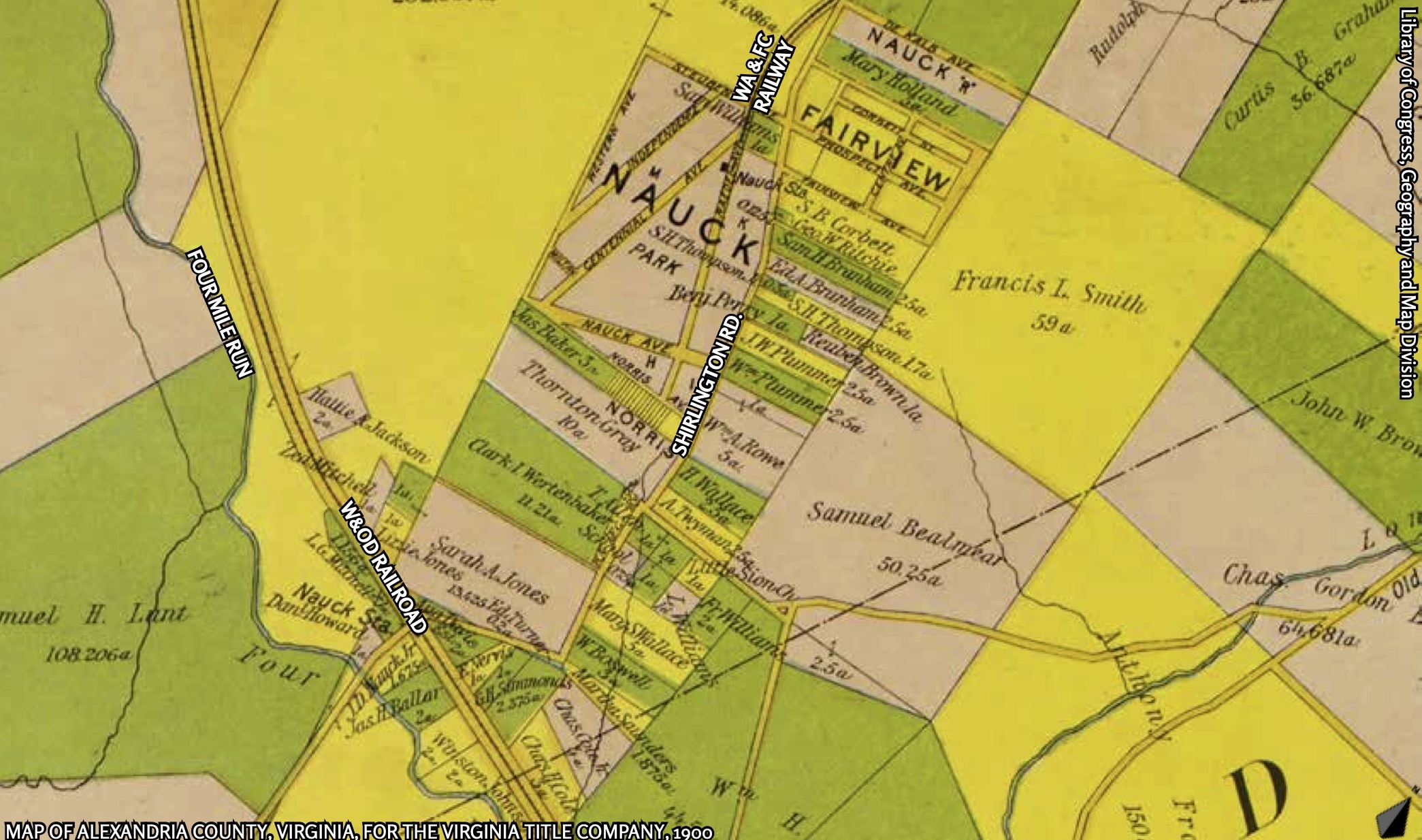
The subdivision of Nauck slowly grew in the late nineteenth century. The availability of land coupled with a prominent group of settled African American owners, establishment of the A.M.E. Zion Church, success of the Kemper School, and opening of a railroad station on the Richmond and Danville Railroad (later known as the Washington & Old Dominion Railroad) made it a desirable location.
The Nauckville Post-Office, Nauckville is about two miles from the Arlington Post-Office, and with a Depot Station, School-house, and Church, to the population of one hundred fifty citizens are entitled to a post-office of their town.
—Washington Bee, June 13, 1896
The neighborhood welcomed an influx of African Americans forced to vacate Freedman's Village. Between 1880 and 1900, the majority of Nauck residents served as farm laborers or brick layers. Additional employment opportunities were made possible with the opening of Nauck Station on the Fort Myer line of the Washington, Alexandria, and Falls Church Railway at the turn of the twentieth century. The electric railway allowed residents of Nauck to more easily commute to Rosslyn, Washington, D.C., and other nearby places of employment.
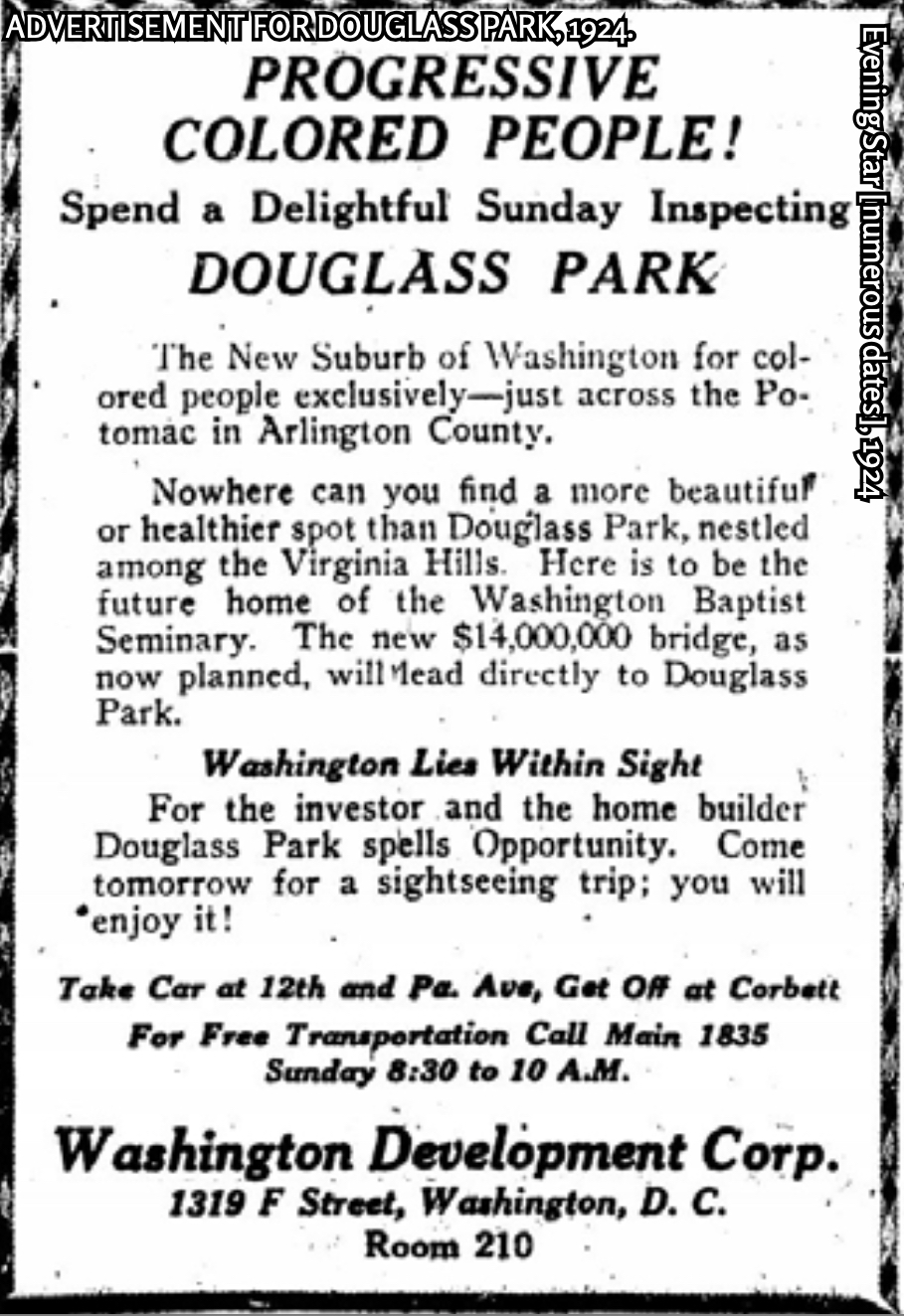
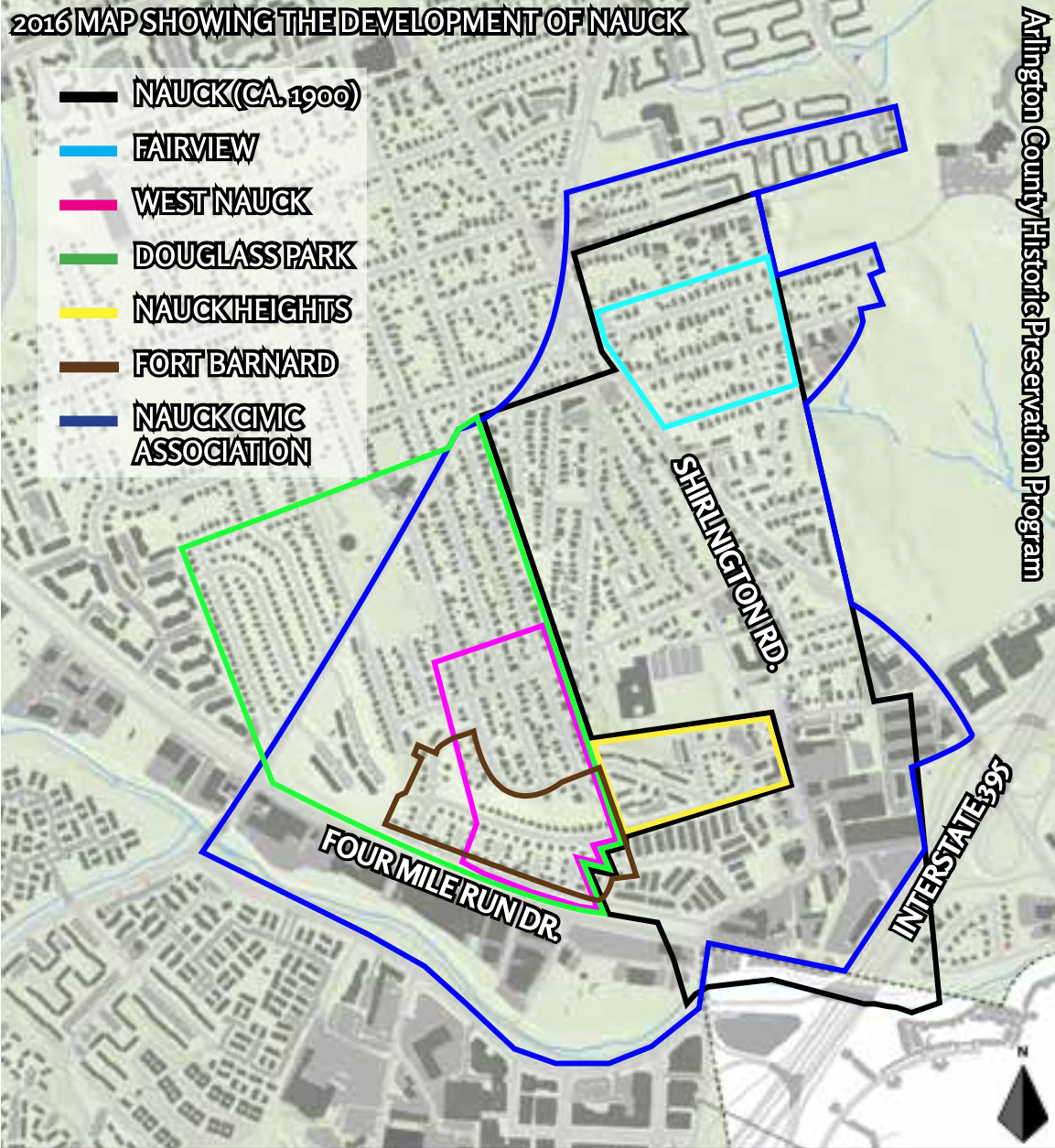
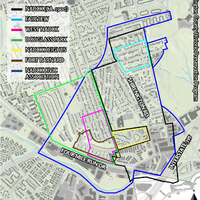
Development of the neighborhood continued but African American settlement to Nauck, Alexandria County, and Virginia would soon be depressed with the adoption of the Virginia Constitution in 1902. The State Constitution discriminated against blacks in numerous ways including disenfranchisement, segregation, and fewer public appropriations. By 1904, the number of African Americans who voted in Virginia dropped from 147,000 to less than 10,000. The Nauck community, however, continued to grow due to local residents who further subdivided property (such as the heirs of Thornton and Selina Gray, William Rowe, Henry Wallace, and Mary Norris) or the creation of adjoining subdivisions such as Fairview, West Nauck, Douglass Park, and Nauck Heights. All or significant sections of these subdivisions are considered as part of the present Nauck community. Nevertheless, Nauck still had a significant percentage of vacant lots by World War II.
Nauck's churches, schools, and lodges provided social, cultural, and religious enrichment. Jim Crow laws led to the establishment of many African American-owned businesses, particularly along present-day South Shirlington Road. By the mid-twentieth century, Nauck businesses serviced the basic needs of its residents and beyond. Cecilia Gertzikoff and Etta Bregman opened a small grocery store named Green Valley Market. Ralph Delaware Collins started the Friendly Cab Company. James Elwood Chinn opened Chinn Funeral Home. Restaurants, auto repair stores, television repair stores, beauty and barber shops, a pharmacy, and other stores created a vibrant community. Similar to Hall's Hill, some residents operated small businesses from their homes, but these stores were closed after the end of segregation.
-
People
-
Thornton and Selina Gray’s heirs
William Rowe’s heirs
Henry Wallace’s heirs
Mary Norris’s heirs
Cecilia Gertzikoff and Etta Bregman
Ralph Delaware Collins
James Elwood Chinn
-
Place
-
Fairview
West Nauck
Douglass Park
Nauck Heights
Green Valley Market
Friendly Cab Company
Chinn Funeral Home
-
Source
-
A-Guide-to-the-African-American-Heritage-of-Arlington-County-Virginia.pdf, 25-27.