-
Subject of Research
-
Freedman's Village
-
Story
-
When President Lincoln passed legislation freeing all the slaves in the District of Columbia on April 16, 1862, large numbers of emancipated and fugitive slaves from Virginia and Maryland fled to the city for protection. Facing a humanitarian crisis, contraband hospitals and camps were established, but overcrowding and poor living conditions led to rampant diseases that contributed to high mortality rates. The issuance of the Emancipation Proclamation on January 1, 1863, led to an additional influx of African Americans and prompted military officials to establish Freedman's Village.
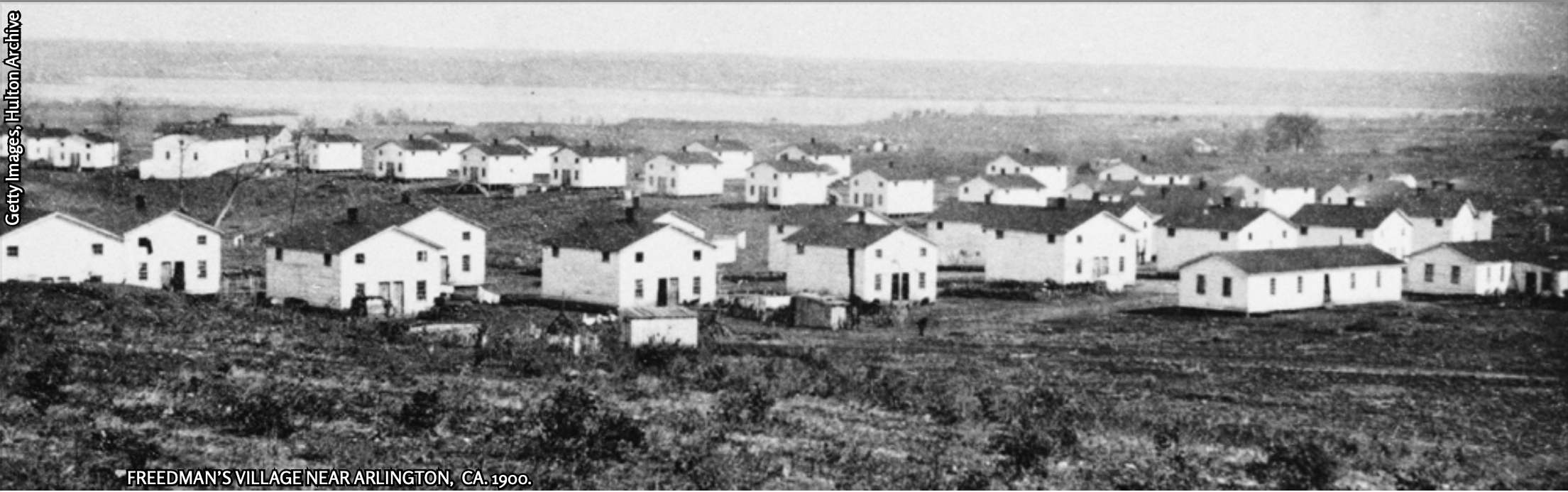
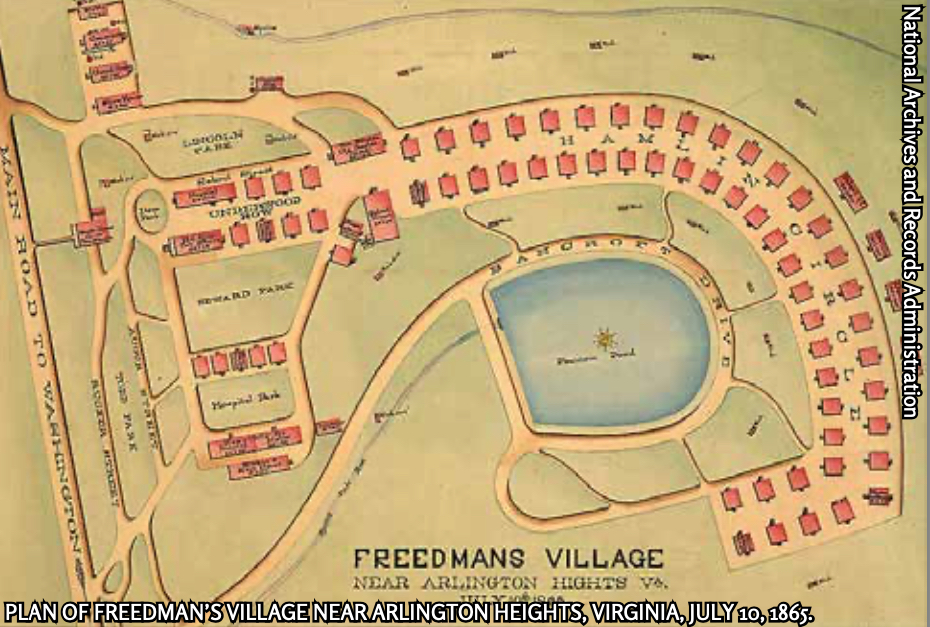
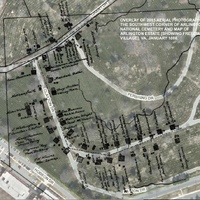
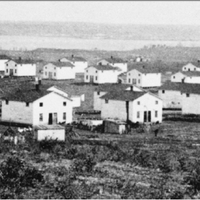
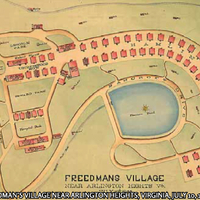
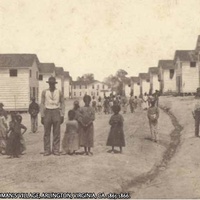
On May 5, 1863, Lieutenant Colonel Elias M. Greene, and Danforth B. Nichols, American Missionary Association, selected Arlington Plantation as the site for a model community for emancipated and fugitive slaves. The location satisfied the government's desire to remove the former slaves from the city and served as a symbol to house the freedpersons on Robert E. Lee's property. By June 1863, 100 former slaves settled on "a fine plateau on the top of a hill on the Arlington Estate." Formally dedicated on December 3, 1863, the village consisted of approximately 50 frame dwellings each divided down the middle for occupancy by two families, a hospital, a home for the indigent, a school, and a chapel.
The Freedman's Bureau categorized residents into three classifications: 1) dependents (well and sick) who were unable to work; 2) residents in government employment; and 3) residents who received rations and liens on crops. The objective of the camp was to provide protection, education, instruction, and employment to residents. Men living at the village were often expected to work as military laborers or on government farms. Women labored in tailor shops sewing clothing and other goods. Over a three-month span, the industrial school produced 1,000 garments per month. The government assumed that the village would serve only as temporary housing, but many residents stayed and created a semi-permanent settlement that lasted until the turn of the twentieth century.
The population of the village greatly fluctuated with estimates suggesting over 1,000 residents at first. On one day alone, March 22, 1864, 408 survivors from the failed freedmen colony established on Ile a Vache, a small island off the cost of Haiti, arrived at Freedman's Village. In July 1867, 837 inhabitants lived at Freedman's Village: 619 occupying tenements (330 of whom were dependent), 83 residing in the home for the indigent, 35 staying at the hospital, and 100 in the vicinity of the village proper.
Living conditions and the treatment of residents also widely varied. In December 1864, an investigation into the treatment of residents yielded troubling results, but the investigation spurred improvements.
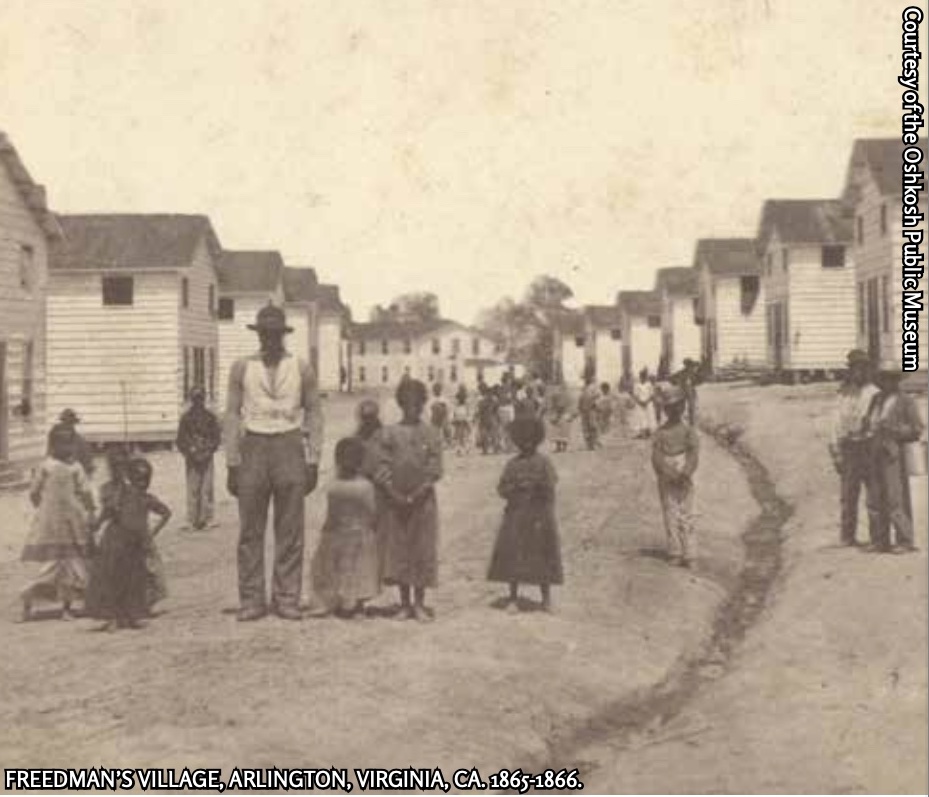
Within the short space of three weeks thirty of these houses, forming one hundred and twenty distinct dwellings have been nearly completed. The inmates of the old tents have been removed to these comfortable dwellings, and the whole camp wears a different aspect.
'The Home' has been opened; and the old and feeble have been comfortably provided for. The hospital was also opened with thirty-two beds within ten days after our first visit. This has been a great relief; and a number who [were] suffering in misery have passed away their last hours in comparative comfort. —Special Inspectors at Arlington Heights, 1864
Some residents resented the policies of both the Army and then the Bureau of Refugees, Freedmen, and Abandoned Lands. Tensions over rent and rent collection strained relations. In 1866, the Freedmen's Bureau issued regulations that all inhabitants who were remotely capable enter the workforce and be required to pay rent in advance. Fifty-two heads of family were relatively successful and cultivated 280 acres of land on the estate. Renters of land included William Butler, Thornton Gray, William Rowe, and Austin Syphax. Dependent households with a lack of job opportunities, however, suffered under the new regulations. A number of residents that constructed dwellings outside of the village proper were evicted from their homes.
Closing of Freedman’s Village
In 1868, government officials attempted to close Freedman's Village permanently, but the residents successfully resisted. The government then moved the inhabitants of the Abbott Hospital and Home for the Indigent to Freedmen's Hospital in Washington, D.C. Residents of the village were allowed to purchase their dwellings and rent approximately 600 acres of land (in approximately 10-acre lots).
[In 1868,] the buildings were generally of frame; in size about 28 by 24 feet; one and a half stories in height, with 8 rooms each. They had shingled roofs, brick flues, and were sheathed on the outside with rough weather-board siding. They were not plastered or [sealed] inside. The price paid was from $35 to $50 for each building. —Military Reservation of Fort Myer and Arlington, VA., 1888
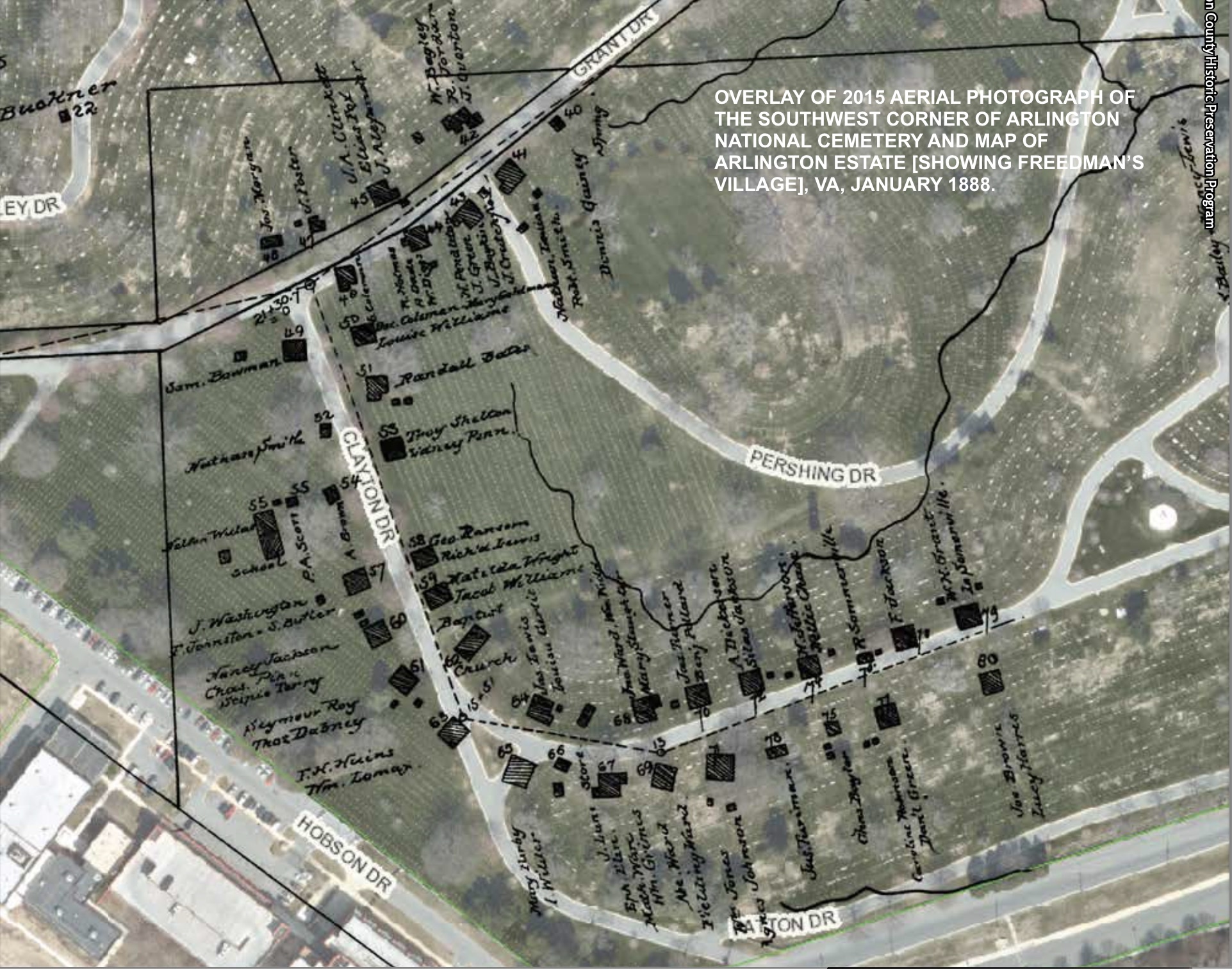
The residents continued to live on the property for another 30 years and invested in the community. They believed that they would possess a claim to Arlington as implied by the government. Between 1868 and 1888, new homes were constructed, improvements were made to the purchased dwellings, and a brick church was built.
Most of the purchasers have improved the premises by reflooring, by reroofing, by plastering or ceiling the rooms, and in several cases such improvements have been equal to twice or thrice the original cost of the building. [The buildings]...are occupied by the builders, or by those who purchased from the builders. Io these have been added small outbuildings, such as stables, sheds, chicken-houses, etc. —Military Reservation of Fort Myer and Arlington, VA., 1888
In 1888, the village consisted of 124 dwellings, 3 shops, 2 churches, 1 school, and 170 families totaling a population of 763. There were two justices of the peace, one constable, and two special policemen. Most of the adult males voted and paid taxes (personal property, poll, school, and road taxes). Over 50 percent of the families who lived at the village had resided on the property for at least 15 years. Development pressure and other factors led to renewed efforts to close Freedman's Village. John B. Syphax requested that the Secretary of War compensate each homeowner $350 for the loss of property.
-
People
-
William Butler
Thornton Gray
William Rowe
Austin Syphax
John B. Syphax
-
Place
-
Green Heights (past)
Arlington National Cemetery (current)
-
Source
-
A-Guide-to-the-African-American-Heritage-of-Arlington-County-Virginia.pdf, 5-10.